


The Life and Legacy of Alexandra David-Néel
Alexandra David-Néel (1868-1969) was a trailblazer, a woman of boundless curiosity and resolve. Born in Paris, she defied societal norms to become one of the first Western women to explore the heart of Tibet and document its spiritual traditions. Her life was a symphony of bold exploration and intellectual pursuit, seamlessly blending East and West in her writings and teachings.

“To the man who is afraid, everything rustles.”
David-Néel’s life began with an early fascination for travel and philosophy. Raised in a conventional European environment, she yearned to escape its confines. Her youthful travels to England, Switzerland, and Spain only whetted her appetite for more distant lands. Inspired by Eastern spirituality, she declared, “I will go where monks tread.”
A Pilgrimage of Discovery
In 1911, she embarked on her transformative journey to India. Immersing herself in Buddhist teachings, she studied under revered lamas and experienced the ascetic life. Her quest for knowledge took her to the Himalayan kingdom of Sikkim, where she befriended the 13th Dalai Lama and became fluent in Tibetan. She later wrote, “The man who is swimming against the stream knows the strength of it.”

“The lands I have crossed are as a mirror; they have shown me myself.”
Her most daring feat came in 1924, when she secretly entered the forbidden city of Lhasa, disguised as a beggar. At the time, Tibet was closed to foreigners, and her journey through treacherous mountain passes required extraordinary courage and determination. In her memoir My Journey to Lhasa, she recounts the perils and triumphs of this clandestine adventure, shedding light on Tibetan culture and spirituality.
Wisdom Beyond Borders
David-Néel’s writings, including Magic and Mystery in Tibet, remain seminal works, offering a rare glimpse into a world few outsiders have witnessed. She introduced Western audiences to Tibetan Buddhism, demystifying its practices and philosophies. Her unique perspective—combining rigorous scholarship with firsthand experience—captured the imagination of readers worldwide.

A Legacy of Resilience
Returning to Europe in her later years, David-Néel shared her insights through books and lectures. Her indomitable spirit continued to inspire adventurers, scholars, and spiritual seekers alike. She lived to be 101, leaving behind a legacy of courage and intellectual curiosity.

“Courage is not the absence of fear, but the triumph over it.”
Alexandra David-Néel’s life is a testament to the power of perseverance and the thirst for understanding. She demonstrated that exploration is not merely a journey across landscapes but a profound quest for inner truth. As she once said, “One must go beyond the self to discover the infinite.”
Her story endures as a beacon for those who dare to dream, to seek, and to embrace the unknown.
The Travelling Jacket
Five countries, five crafts, and one jacket.
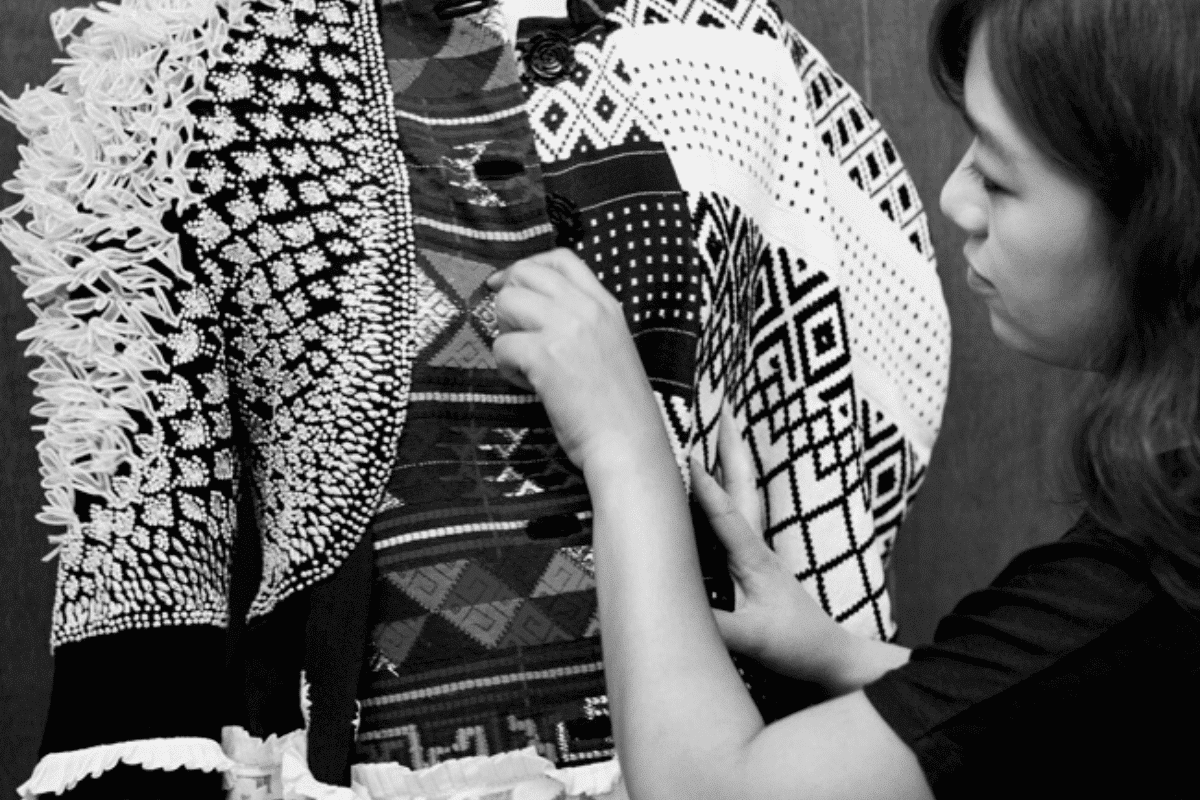
In 2016, five designers from across South Asia came together to create what is now known as the traveling jacket. Although this jacket was created seven years ago, the story continues to serve as an inspiration of connectivity, and the jacket remains a portrayal of extraordinary synergy. Vogue India refers to it as the ‘metaphorical adventurer,’ and rightfully so, it was.
In the realm of fashion, where creativity and cultural expression intertwine, a remarkable creation has emerged: the traveling jacket, crafted by South Asian designers. This distinctive garment encapsulates the rich textile crafts of South Asian traditions, seamlessly blending them with contemporary design elements. As we delve into the story behind this sartorial marvel, we witness a celebration of diversity, artistry, and the power of fashion to bridge cultural divides.
India, New Delhi

The commencement began in India, New Delhi, where designer Rahul Mishra constructed the framework of the jacket using black fabric in his studio. He designated one of the shoulders and half of the bust area as his personal canvas to showcase his craft through detailed embroidery and unique lacework in white, reserving the remaining area for his fellow artists to portray their visions.
Sri Lanka, Colombo

The jacket started her first travel journey, progressing her way to Sri Lanka where designer Kanchana Thalpawila awaited in her studio in Colombo. With a few setbacks in the process and tightness in schedule, the designer and her team managed to push their way in completing their part on the due schedule. The Sri Lankan designer sourced her idea from the Royal costume of the kings and noblemen of Kandy and constructed round-shaped sleeves that resemble the trunk of a Sri Lankan elephant. She then incorporated the weaving technique known as Dumbara, native to the nation that dates back thousands of years, yet still retained the monogrammatic visual set by the first designer.
Bangladesh, Dhaka

After completing its second mission, the traveling jacket made its way to Dhaka, Bangladesh, to the studio of designer Humaira Khan, who awaited in excitement to compose her design on the jacket. The designer chose ‘Jamdani,’ a Bangladeshi textile which, in fact, is known to be one of the finest muslins woven in Bangladesh, and finally combined it with Dhaka cotton known as ‘taat,’ to finish her representation on the progressing jacket. Unfortunately, during that time, in her neighborhood, a terrorist attack took the lives of 20 people in a restaurant in Gulshan 2 and shook the city. Khan lost dear people she knew, and in her grief, she still stood strong and helped support her community in whatever ways she could. Before sending off the jacket that’s bound to travel, she embroidered along the edge, ‘Love is Humanity,’ in their native language, Bangla.
By now, the traveling jacket has been embedded with deep messages and sentiments that speak beyond tangibility.
Nepal, Kathmandu

The jacket then directed her way toward the Himalayas where designer Aayusha Shrestha resides in Kathmandu, Nepal. The city at that time was still healing from calamities caused by the earthquake the year before. Since Shrestha is a jewelry designer, she worked her way around in accessorizing the garment with a hand-crafted belt and buttons. Inspired by the lotus motif that symbolizes spiritual enlightenment in Buddhism and Hinduism, she worked with traditional Nepali metal craftsmen to craft the belt. The designer collected animal waste, like the horns of sacrificed animals for religious ceremonies, and had them carved out as buttons by the master craftsmen. She said It was her way of showing respect to the animals that had been sacrificed for the sins of human beings.
Bhutan, Paro


Khoma, the Sound of Weaving
A collective thumping sound echoes in the village of Khoma with the wake-up call from their local roasters.
The village of Khoma in the region of Lhuntshe in Bhutan is still an active weaving community whose history lies in the depths of the textiles that were created and are still being woven solely by the women of the community. Bhutan celebrates its textile craftsmanship to this day as the country mandates the wearing of the national attire ‘Gho’ for men and ‘Kira’ for women, which are largely woven on a back-strap loom, hence the practice of this craft is spread across the country.
The weaving community of Khoma is one of the extraordinary villages in Bhutan, where it is apparent that weaving textiles is a lifestyle they’ve adopted and a means of expression. Every single woman from this village is naturally brought up learning and practicing this craft conventionally through kindred bonds with their mothers. It is also known that they specialize in a certain technique of weaving known as the Kishuthara (silk on silk textile) which involves weaving supplementary weft patterns with extra yarns over the constructed base yarn, generally using silk yarn as the base and silk again for constructing the patterns and motifs known as ‘trima’.

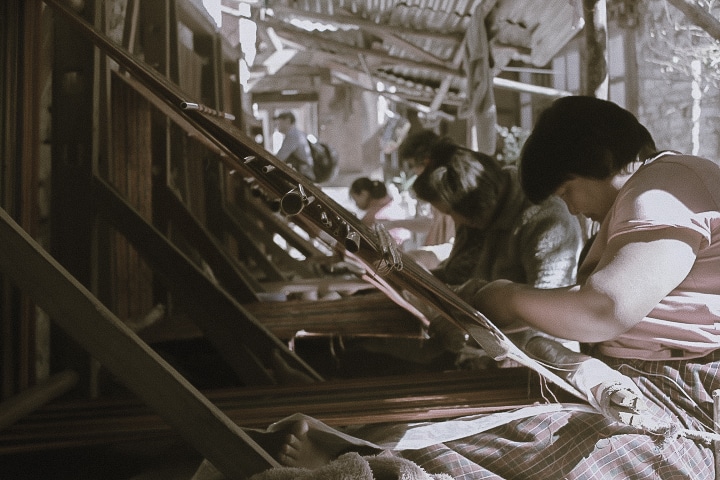
Several women in that community have mastered the art of weaving Kishuthara which takes years of practice and the rest of the women express aspirations to master it someday. Oral traditions and folksongs indicate that this intricate technique of back-strap loom was introduced by Chinese Princess Wencheng, known to the locals as ‘Ashi Jyazum’, back in the 7th century, and traces of her life remain as stories and heritage for Khoma.
Khoma alludes to a mundane atmosphere of village life mended with a reflection of solitude as the women concentrate on their crafts for hours. The first thing you hear after the break of dawn is the thumping sound of weaving echoing around the village as the sun embraces the valley. Several groups of looms are installed together making the sound of weaving stronger. Due to the long hours invested in weaving complex textiles, the locals express that they enjoy doing it together in groups, sharing a mutual bond and comfort. A life lived slowly, a craft through slowness, and a tradition preserved.

Photography and words by Yeshey Choden – Commissioned by hima jomo
Discover Ladakh: The Land of High Passes
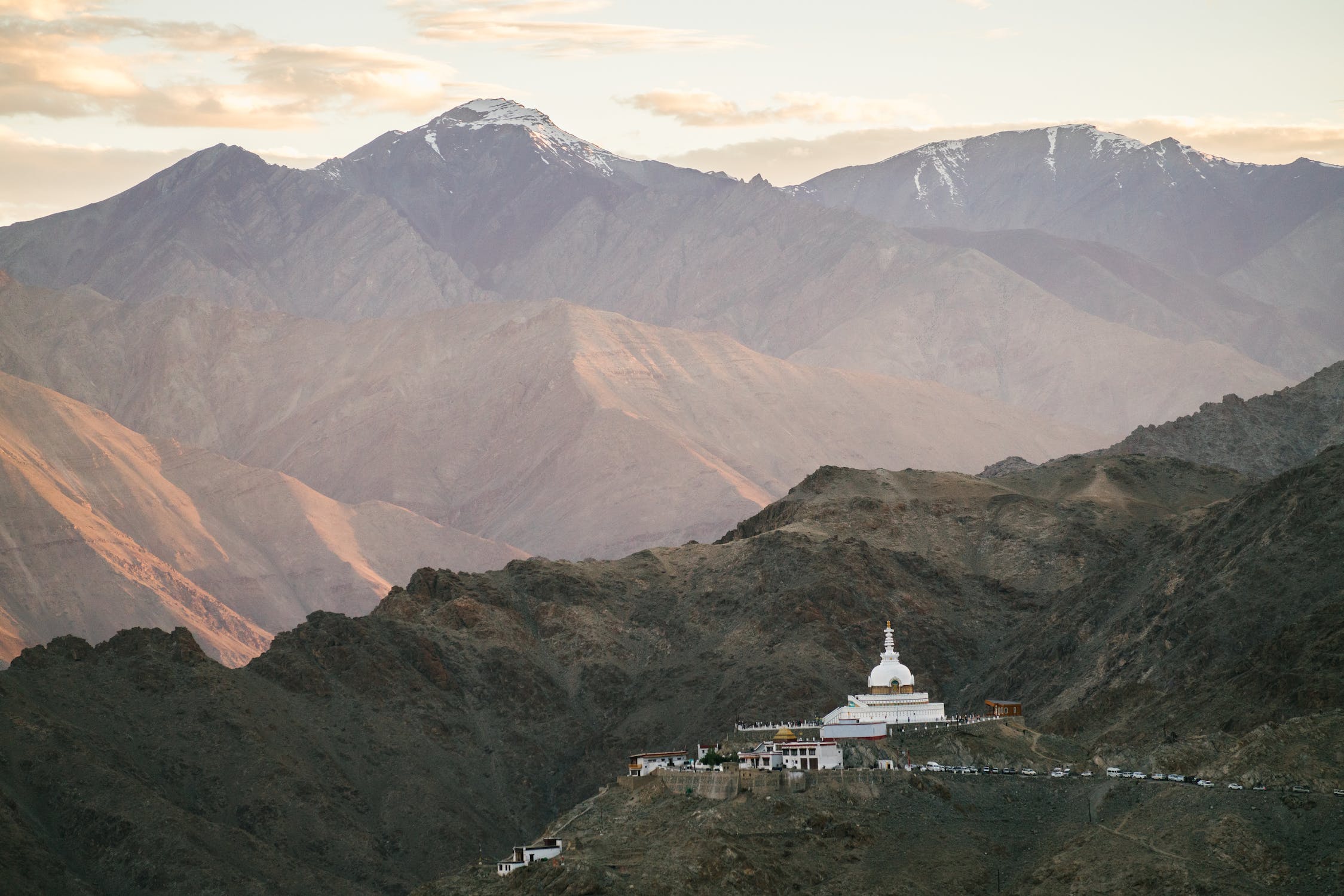
India is known globally for its vibrant and bustling megacities, but in its northern reaches lie the mountains and valleys of Ladakh, a name that means the land of high passes. Indeed, Ladakh is the highest plateau in India, with most of the land hovering above 3,000 m (9,800 ft.) in elevation. The region, which covers approximately 117,000 square kilometers, offers a remote escape, a cultural melting pot, and an opportunity to imagine life in a bygone era.
Ladakh extends from the Himalayan Ranges to the Kunlun and encompasses the upper Indus River valley. In the present day, Ladakh borders the southwest corner of Xinjiang and Karakoram Pass to the north, Tibet to the east, the Lahaul and Spiti regions to the south, and the Jammu and Baltiyul regions to the west.
The striking peaks of Ladakh, which have long acted as natural borders, were formed over 45 million years ago as the Indian plate was thrust into the more stationary Eurasian plate. Ladakh’s four mountain ranges—the Himalayan, Zanskar, Ladakh, and Karakoram ranges—form a labyrinth of jagged, snow-capped peaks. The region is also home to the Siachen glacier, the largest to exist outside the world’s polar regions, vast azure lakes such as Tso Moriri, and a network of riverways that sustain life in a seemingly barren landscape.
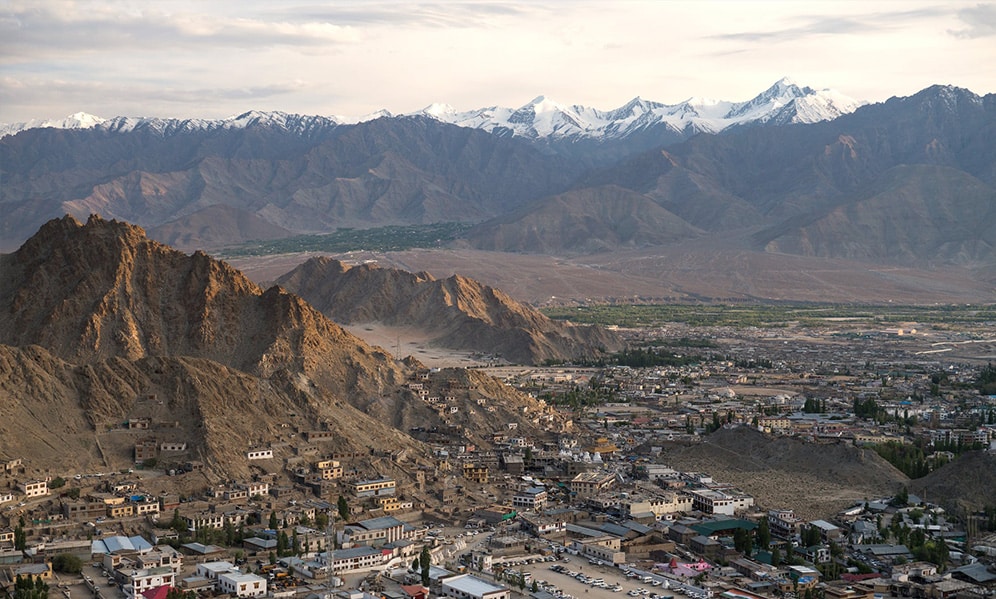

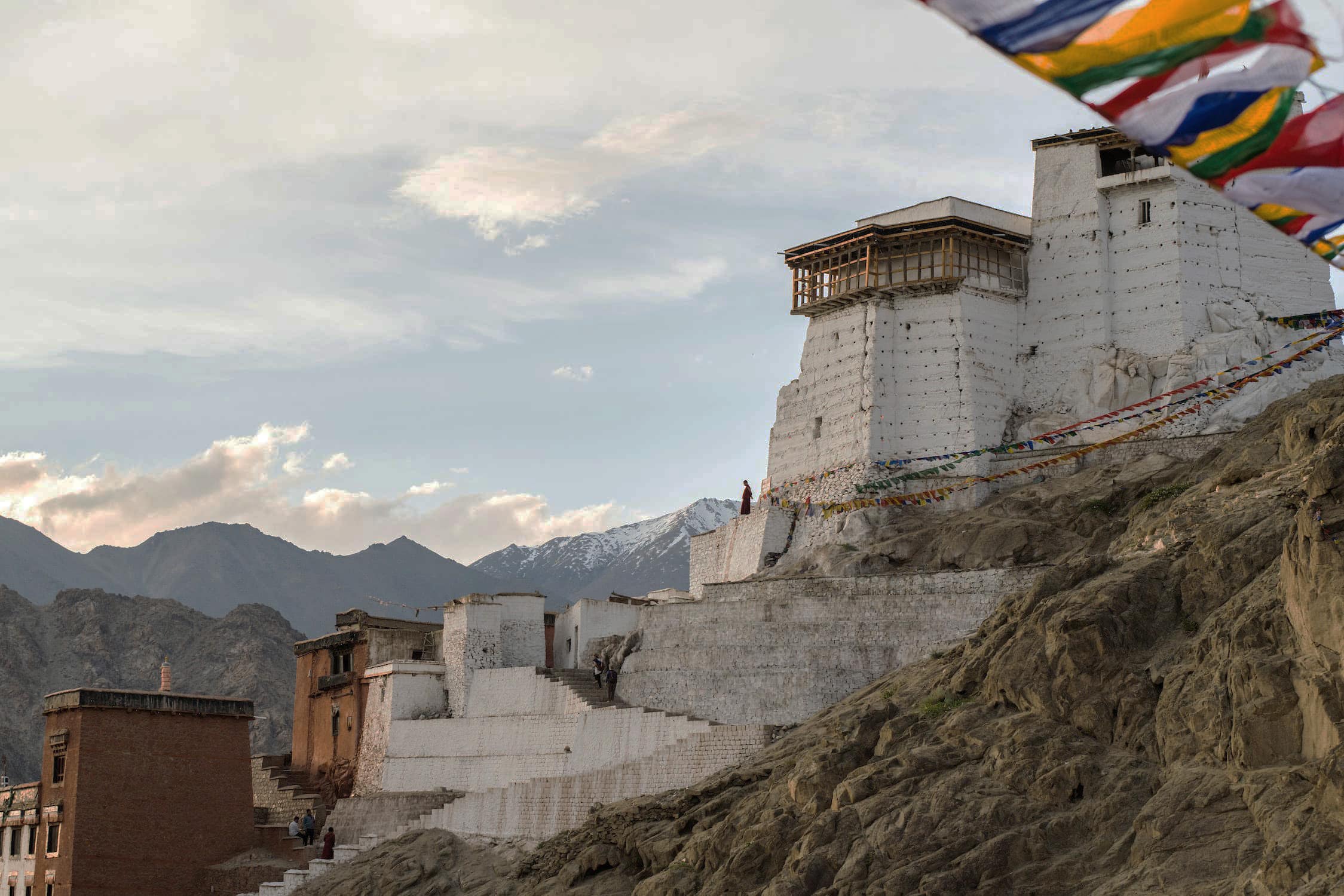
Home to approximately 300,000 people, Ladakh is one of the most sparsely populated regions of India. Leh is both the largest city and present-day capital of Ladakh. It was also the historic capital of the Kingdom of Ladakh, which was ruled from Leh Palace. The palace, which was built in the same style and era as Tibet’s Potala Palace, has been restored in recent years to preserve Ladakhi history and enlighten the region’s visitors. Beyond cities like Leh or Kargil, exist small villages where life revolves around farming and shepherding. Some of these villages still exist deep in mountain valleys without paved roads, requiring a day or more of walking to reach.
Traversing mountain passes has long been a part of life in Ladakh. Historically, Ladakh held a strategic position at the crossroads of important trade routes. Trans-Himalayan caravans would pass through this center of commerce and culture to trade salt, grain, cashmere, indigo, silk, and other precious goods.
With Lhasa only 1,500 km away, it should come as no surprise that there are strong cultural ties between Tibet and Ladakh. Shared traits include ethnicity, religion (Vajrayana Buddhism), crops like barley, and drinks like butter tea and chhang. Since the 13th century, Tibetan people began to migrate and settle in Ladakh, but it’s worth noting that Buddhism originated in India and spread to Tibet via Kashmir and Ladakh. Today, it is still common to see prayer flags fluttering above white monasteries resting high upon Ladakhi foothills.
Words by Trixie Pacis – Commissioned by hima jomo
Lamali Paper Making
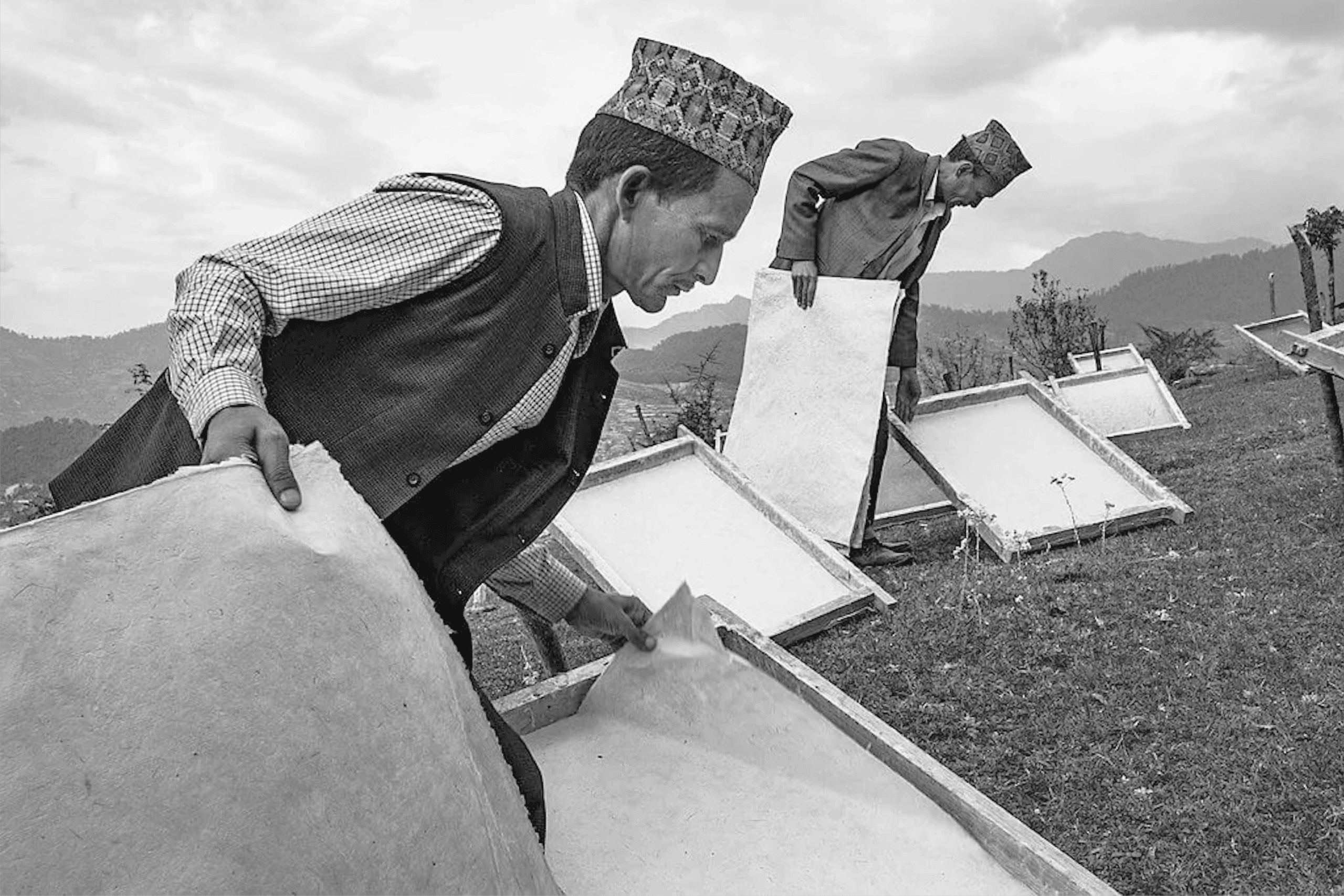
From tree bark to Nepalese Lamali Paper Making
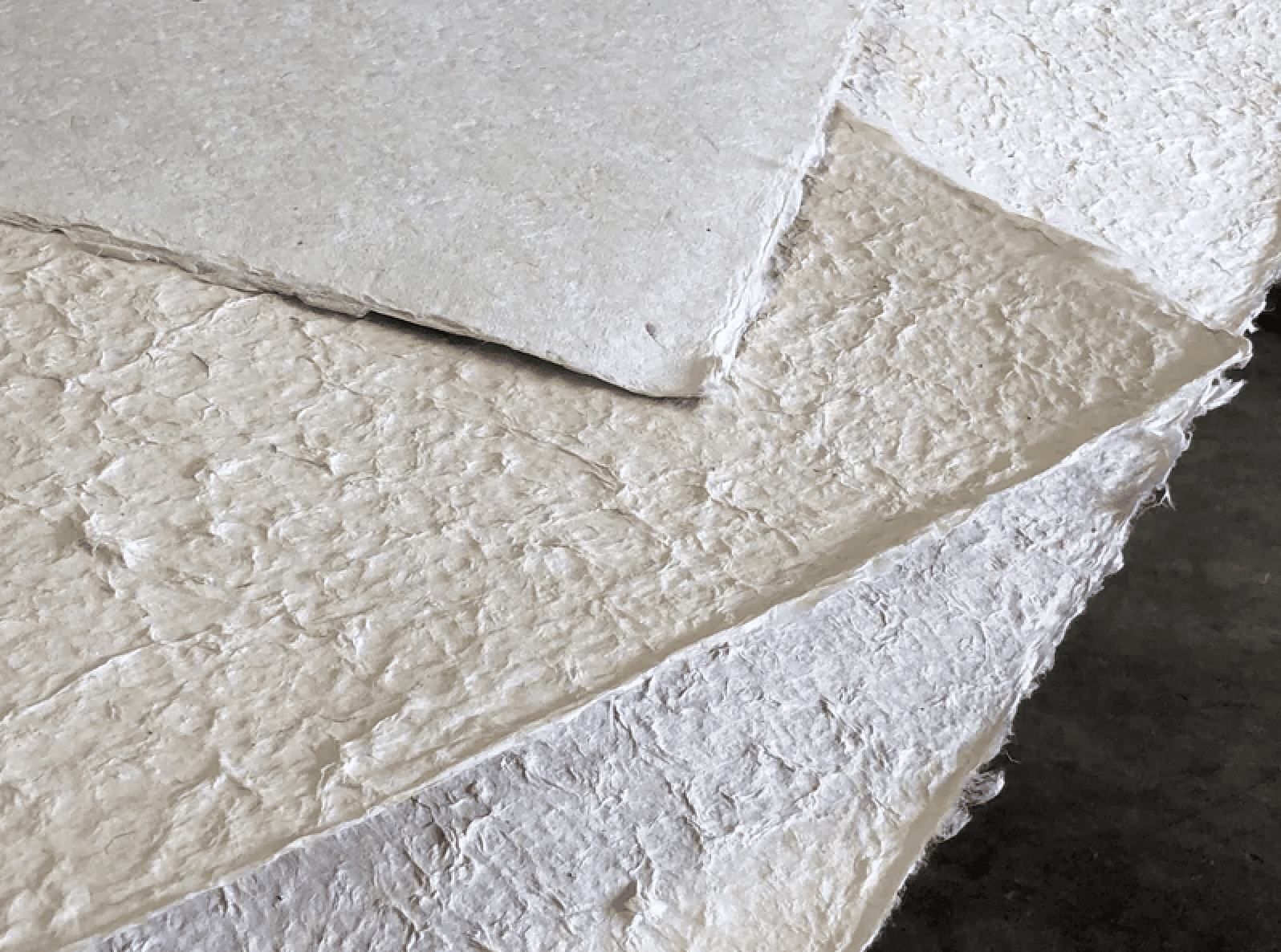
Our ancestors communicated with one another by carving drawings and symbols onto cave walls, tree bark, and clay tablets — but everything changed with the invention of paper. About 2,000 years ago, a Chinese court official named Ts’ai Lun produced the first piece of paper in the city of Lei-Yang. He made pulp by mashing mulberry bark, hemp, and rags then laying the mixture out in the sun to dry. The craft of papermaking gradually traveled across Asia, the Middle East, Europe, and the Americas. Although the general process for producing paper is the same, cultures around the world have used different fibers and developed unique paper-making techniques; Lamali paper of Nepal is no exception.
Lamali paper is made by hand in the mountain regions of Nepal. Historically, paper makers were concentrated in rural regions and most notably in the Baglung District, in Nepal’s Gandaki province. Paper makers use the inner bark of the indigenous lokta bush, a name that encompasses both Daphne Cannabina and Daphne Papyracea. Lokta bushes are evergreen shrubs with white flowers that flourish on the slopes of Himalayan forests. The bush grows at elevations between 1,600 – 4,000 m (5,250 – 13,000 feet) and can reach a height of 5 meters (15 feet). The lokta bush produces strong fibers that make it the perfect source material for paper.
Five Millenia of Asian Art at Paris’ Musée Guimet
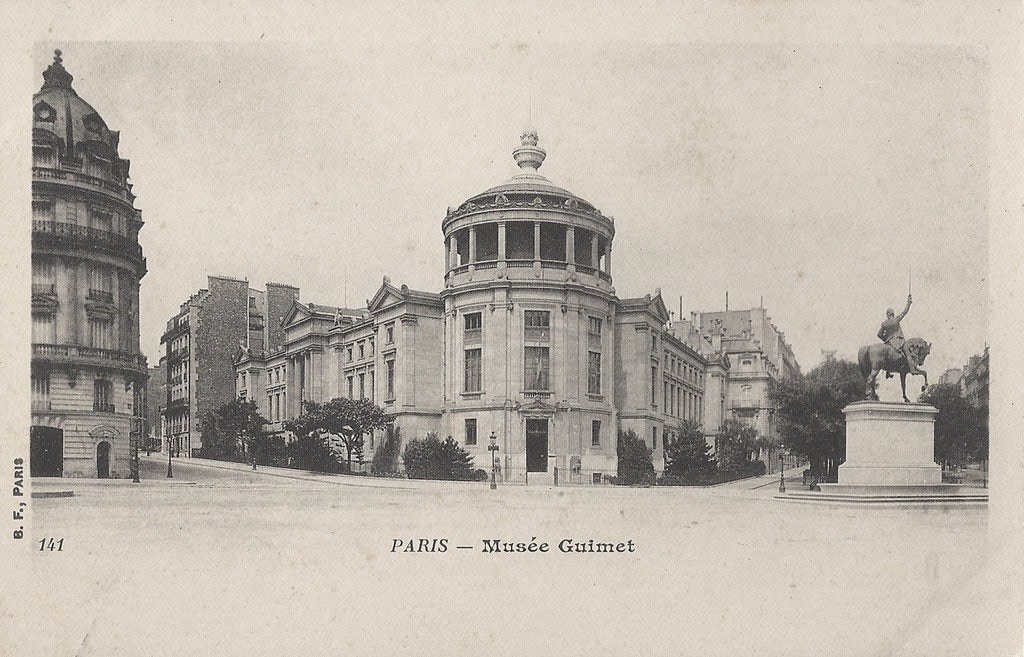
Works of art that have survived the test of time offer us clues about the history and culture of past generations and civilizations. Some of these works are housed at the Guimet Asian Arts Museum in Paris, France. The Musée Guimet is one of the largest collections of Asian art in the world—not to mention the only museum of its kind in Europe. Though lesser-known compared to the likes of The Louvre, this museum is a treasure trove that holds 5,000 years of Asian art under one roof.

The Power of a Thangka Painting
To travelers and collectors, thangkas are vibrant paintings of deities, but to Tibetans, they are the buddhas themselves. Thangkas are a distinctly Tibetan form of art centered around religious figures and symbols. They are hand-painted by Tibetan artists and Buddhist monks who have devoted years to studying.
According to Tibetan lore, thangkas date back to the time of Sakyamuni Buddha. King Uttrayana of Dadok commissioned a painting of the Buddha as a gift to King Bimbisara of Magadha, but when the painters started to paint Sakyamuni Buddha, his holy light blinded them. They completed the painting by observing his reflection in water, and by capturing the Buddha’s reflection, the painters also captured some of his spirit.
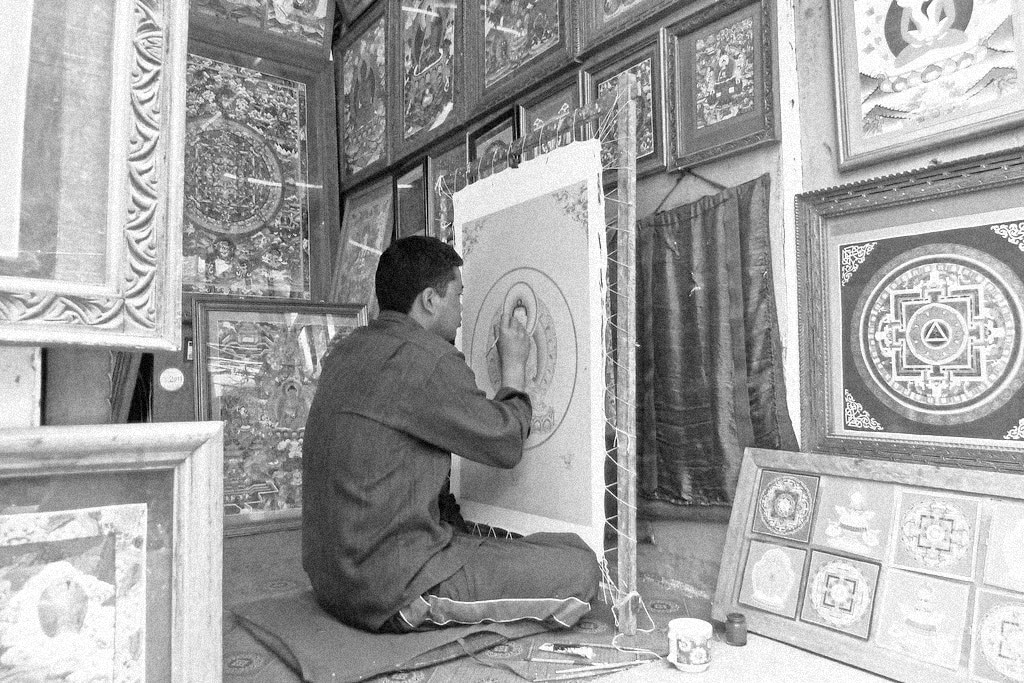
Today, at least twenty thangkas are known to date back to the 11th and 12th centuries. The tradition is rooted in the early paintings surviving in the Ajanta Caves and Mogao Caves of China, where thangka painting developed alongside Buddhist wall paintings. The painting of thangkas spread wherever Tibetan Buddhism was practiced, including Ladakh, Arunachal Pradesh, Mongolia, and other parts of the Himalayas.
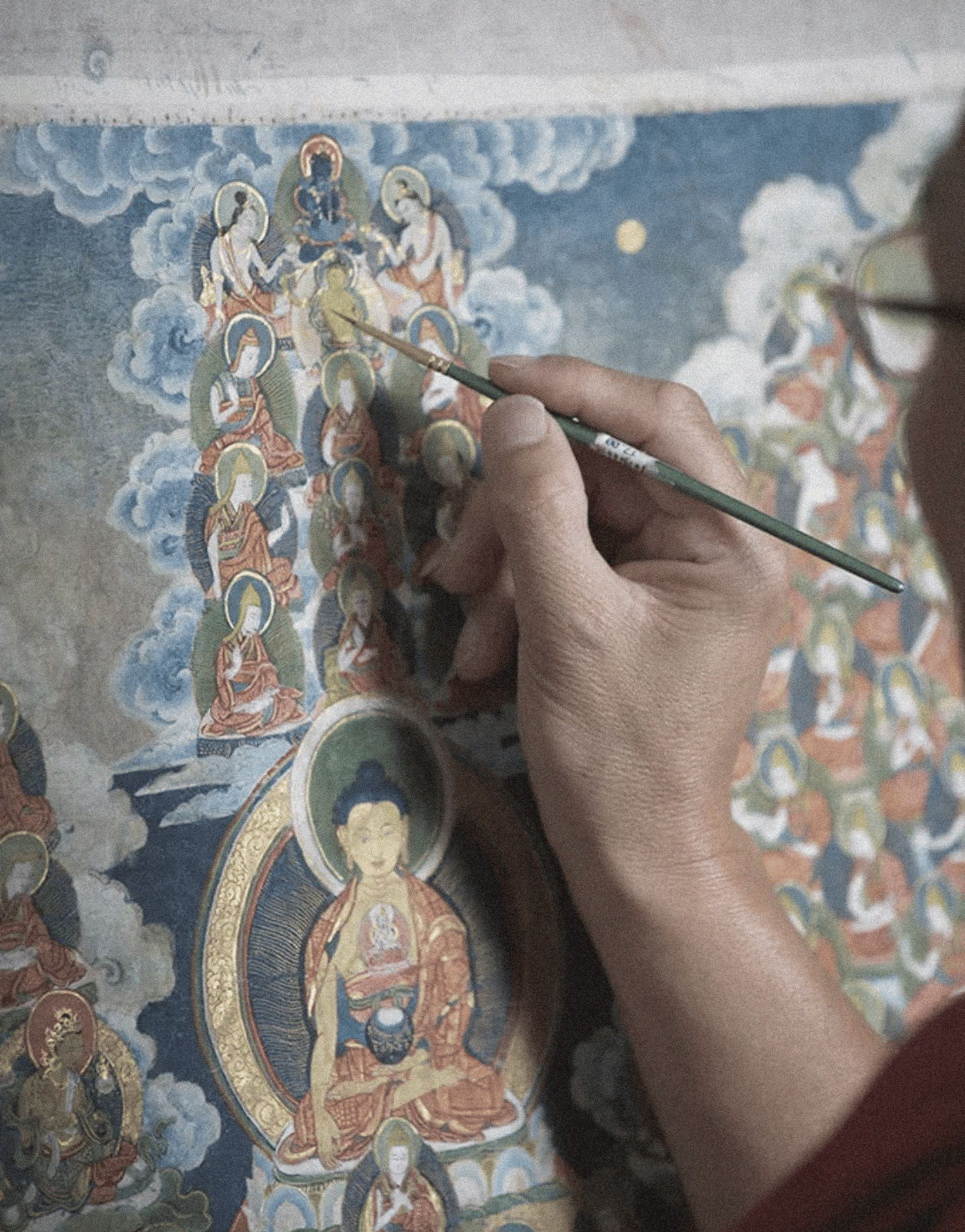
Thangkas usually depict religious figures such as Buddha, Buddhist deities, bodhisattvas (enlightened beings), and teachers. They can also depict Buddhist teachings, events, scripture, and symbols, such as the Bhavachakra (the Wheel of Life). When painting a thangka, it is crucial to depict deities in appropriate body postures (asanas), hand gestures (mudras), and proportions (iconometry). Upholding age-old traditions and painting each brushstroke with intention is important because thangkas are viewed as a form of visual scripture. It can take a painter years to learn the iconometrics, stories, and characteristics of different figures. While some elements of a thangka follow clear-cut rules, a painter has total creative freedom when it comes to other decorative elements such as landscapes and backgrounds.
Before a thangka is painted, painters first purify themselves and their environment by washing their hands and lighting incense. They stretch white fabric across a frame and apply white gesso (a type of primer) or chalk. They burnish the surface with a smooth stone, then outline the image in black or red ink, paint the background black or red, then add the central figure. Final touches are made as the painting is gilded or embellished with gold leaf and mounted on silk.
A thangka is not complete until the consecration ritual. Monks chant, pray, and invoke the deity depicted in the thangka. The deity’s eyes are “opened” as the pupils are painted, and the words om ah hum (body, mind, spirit) are inscribed on the back. Upon consecration, the thangka is not just a painting; it houses the spirit of the depicted deity.
With intricate designs that require hours of artistry, most thangkas are the work of many hands. They are commonly overseen by a master painter who oversees the production of the work and handles the intricate brushwork while allowing students to contribute. To satisfy the commercial demand, some thangkas intended for non-religious use are produced through a combination of hand painting and machine printing.
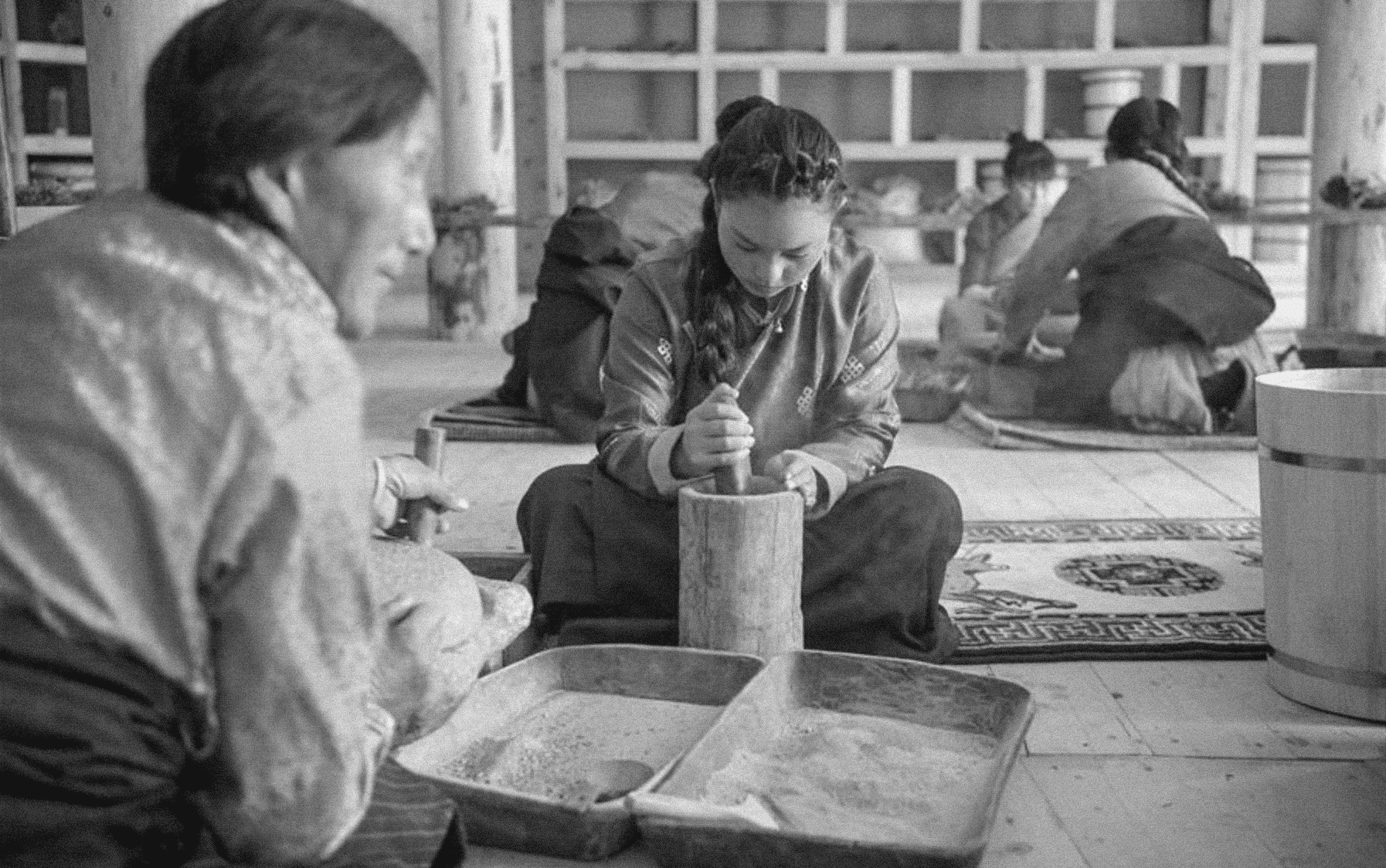
Tibetan Incense Making
It is impossible to envision Himalayan homes and temples without the swirling smoke or aromatic scent of incense. Despite being a relatively inexpensive everyday item, incense holds significant value in the Tibetan way of life for centuries. Rooted in the Latin word incendere, meaning “set fire to,” and the Middle English word encens, meaning “sweet-smelling substance,” incense releases fragrant smoke when burned for meditation, ceremonies, relaxation, or purification. A plume of smoke rising from burning incense ignites the senses of sight and smell while evoking something spiritual within.

The history of incense spans over 6,000 years, originating from ancient civilizations like Egypt and Mesopotamia. Adopted by various cultures, Tibetan incense-making has endured for over a thousand years as part of the broader tradition of Tibetan medicine, emphasizing natural remedies for holistic healing.
Tibetan incense, found in Tibet, Nepal, and Bhutan, is meticulously handcrafted using pure organic materials, often with earthy notes. Traditional recipes sourced from ancient Vedic texts remain unchanged, with fragrant woods like sandalwood, agarwood, pine, or cedar serving as primary ingredients. Herbs, spices, and botanicals further enhance the aroma.
Widely practiced globally, burning incense clears negative energy, aids relaxation, and enhances meditation. Its use in religious ceremonies elevates prayers, while incorporating it into daily routines promotes well-being. Beyond spiritual significance, incense doubles as a natural air freshener and bug repellent, offering a gentle timer as it burns.
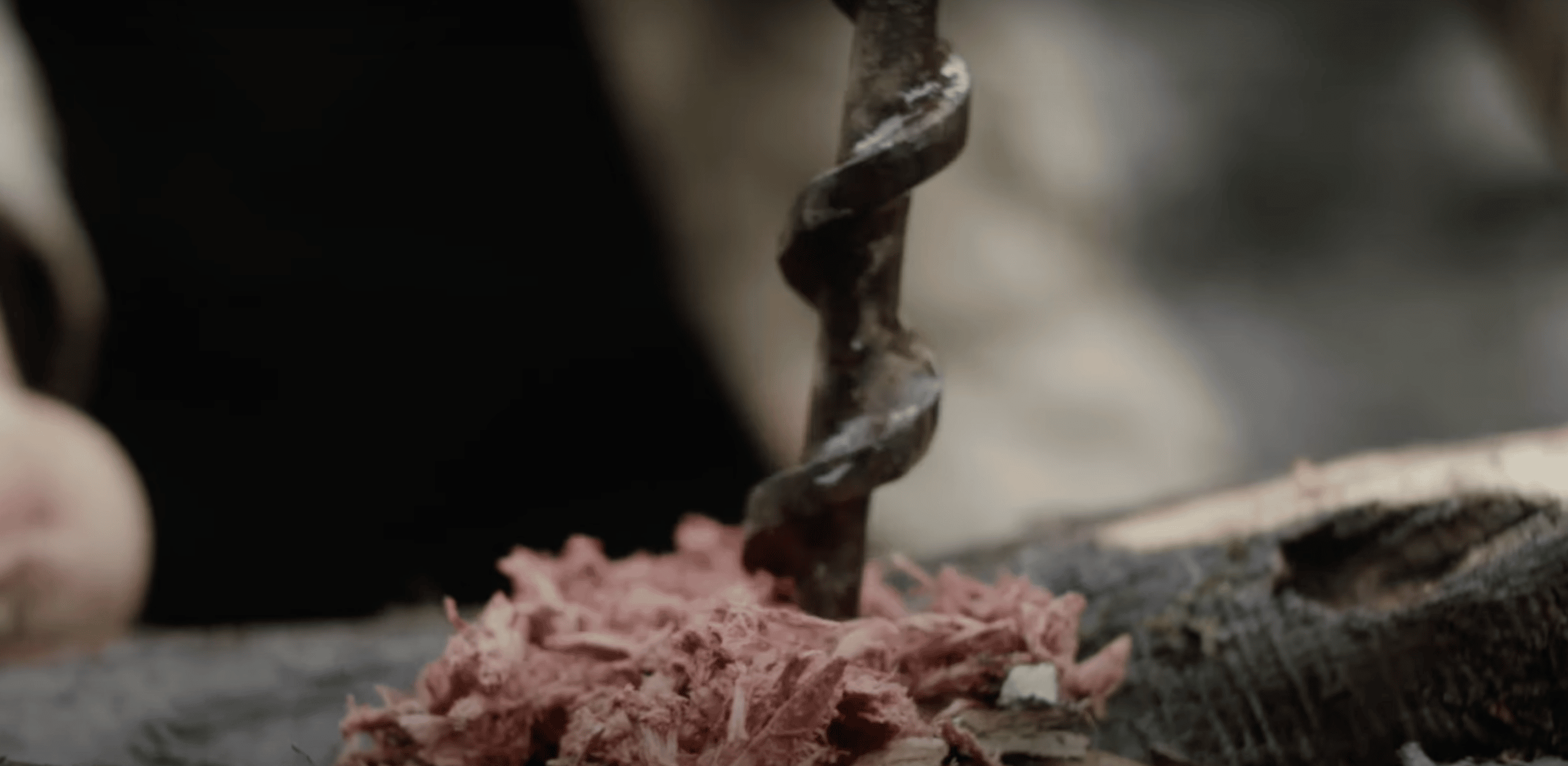

Those who use Tibetan incense appreciate the craftsmanship behind it; after all, it is a practice that takes decades to learn and requires a lifetime of devotion. Unlike previous generations, one no longer needs to be a Buddhist monk to produce incense. In the heart of Shambhala, at the Aba Tibetan and Qiang Autonomous Prefecture, an incense maker named Parkyid has been studying Tibetan medicine and incense-making for twenty years under his teacher Lobsang Tenzin and has ambitions to start his own incense-making business.
Parkyid makes incense using traditional methods to harvest raw materials from the mountains and produce incense by hand. He makes several arduous trips to collect ingredients that grow wild in the foothills of Yala Snow Mountain, one of the four holy mountains in the Garze region. In addition to navigating challenging terrain and fickle weather, he must be able to identify and distinguish hundreds of plants as each one offers unique scents and medicinal properties. Different parts of the same plant, such as the flower or stem, may be used for Tibetan incense-making. Some recipes even call for the same plant picked in different seasons. The entire process is rooted in Parkyid’s deep understanding and respect for the ingredients and the environment in which they flourish.
Once collected, Parkyid grinds the materials into a paste using water and stones. He avoids the use of machines as they produce higher temperatures; this preserves the fragrance and medicinal qualities of the chosen ingredients. Parkyid uses a hollow ox horn with a narrow opening to pipe the paste into long, even strands. Unlike incense from other parts of the world, Tibetan incense does not have a bamboo stick at the center. Once the incense has dried, the strands are bundled, and the process is complete.

The next time you light incense, take a deep breath. Pause and reflect as the scent transports you to the Himalayas, where materials are still plucked by hand, and connects you to an age-old process. Then take a moment to appreciate the work of dedicated craftspeople, like Parkyid, who ensure that the tradition of Tibetan incense-making endures for centuries to come.
Nepal's Honey Hunters
In the misty foothills of the Himalayas, honey hunters risk their lives harvesting wild honey from vertical cliffs as their ancestors have done for centuries. This wild honey is known for its amber color and slightly bitter taste. Also known as ‘mad honey’, it is highly prized for medicinal properties believed to relieve hypertension, provide a burst of energy, or work as a sweet substitute for Viagra. Consuming this honey can cause reactions ranging from a slowed heartbeat and hallucinations to temporary paralysis and unconsciousness. Risk not only lies in consuming this honey, but also in harvesting it.
The harvest takes place twice a year in tandem with spring and autumn festivals. The practice is tightly interwoven with Himalayan culture and beliefs. The honey hunters of Nepal must first perform a ceremony for the cliff gods to pray for safety and forgiveness from the bees. A ceremony commonly involves offerings of fruit, flowers, rice, and sheep.
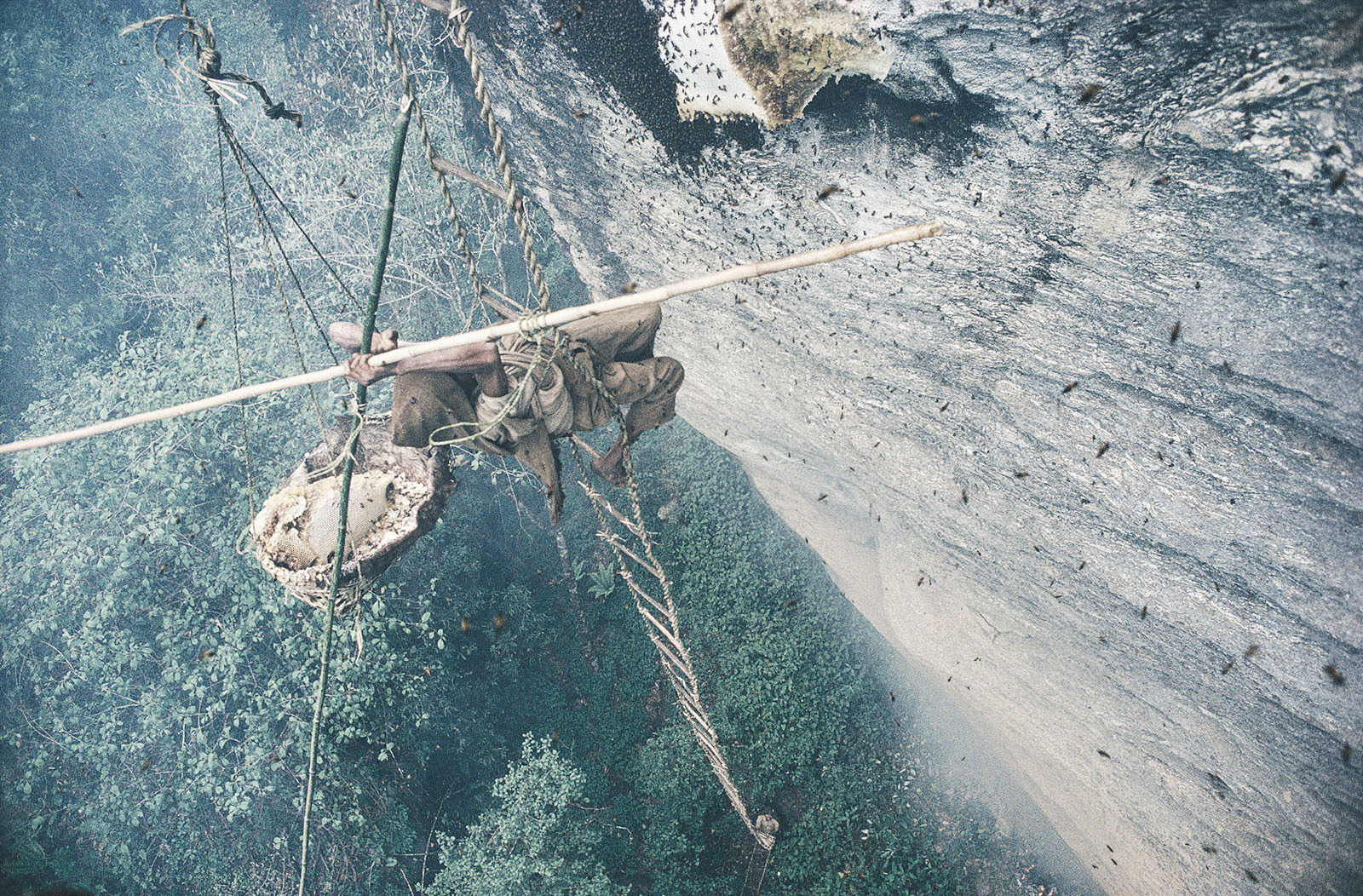
The hunt begins as hand-spun rope ladders are flung down upon sheer cliffs from above, enabling barefoot hunters to reach the precariously perched hives of Apis Laboriosa, the world’s largest honey bee. Smoke is used to disorient thousands of irate bees that must be coaxed to leave their nests. The smoke helps, but there is no way for a hunter to escape the inevitability of being stung.


Blood, bites, and blisters are synonymous with the hunt. Honey hunters muster the courage to invade the hives with a sharp bamboo implement called a ‘tango’ in one hand and the rope ladder in the other. Untethered and suspended at dizzying heights, the lives of these honey hunters depend on their ability to contend with swarming bees while cutting away blocks of precious honeycomb and lowering them to the ground in delicate woven baskets.
Once the honey is harvested, the hunters thank the bees and pray that the colony flourishes so that the practice may continue for generations to come. Much of the honey is destined to travel to Kathmandu, where it is sold to customers around the globe. But some of the bounty is divided and shared by those who have gone to unfathomable heights to harvest it.
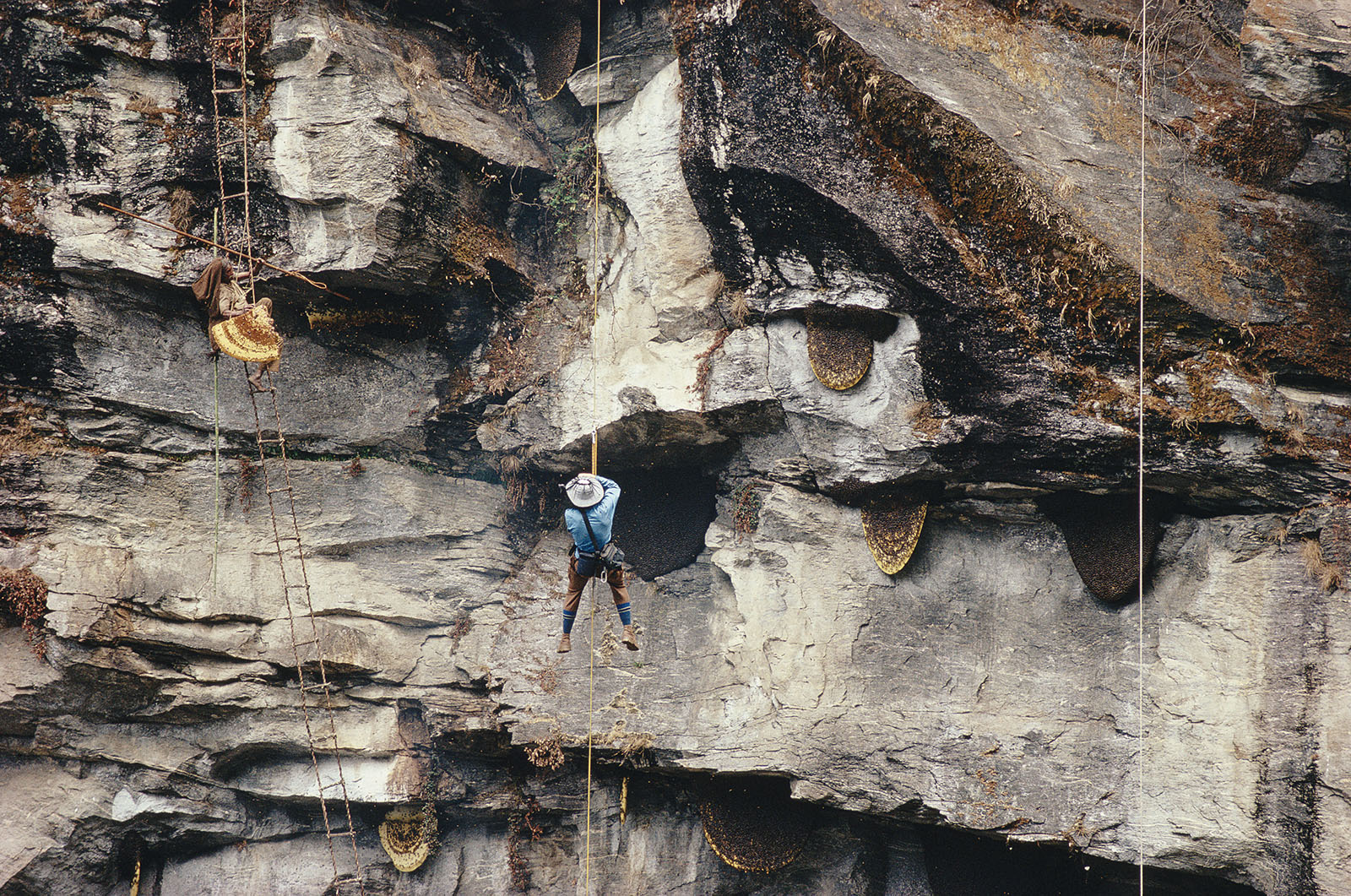
With the demand for wild honey growing, harvesting honey has become a steady source of income for the honey hunters, but recent reports show that this once-plentiful nectar is dwindling just as fast. Ratna Thapa, senior bee scientist at Tribhuvan University in Kathmandu, says, “Every year there is a 70% decline in the Himalayan cliff honeybee population.” The rapidly declining bee population poses an immediate threat to the honey hunters and their traditional way of life.
Stories of the honey hunters of Nepal and their plight have spread across the globe. In 2013, documentary travel photographer Andrew Newey spent two weeks living with the Gurung people of central Nepal in a remote region untouched by tourism to document a three-day autumn hunt. In 2018, National Geographic produced a short documentary film called The Last Honey Hunter in partnership with a local organization called the dZi Foundation. The film’s gravity-defying scenes take viewers on a hunt with Kulung culture in Nepal’s Hongu river valley. Powerful stories such as these offer a rare window and emotional connection to an ancient Himalayan tradition on the brink of extinction.
Photography by Eric Valli
Words by Trixie Pacis – Commissioned by hima jomo
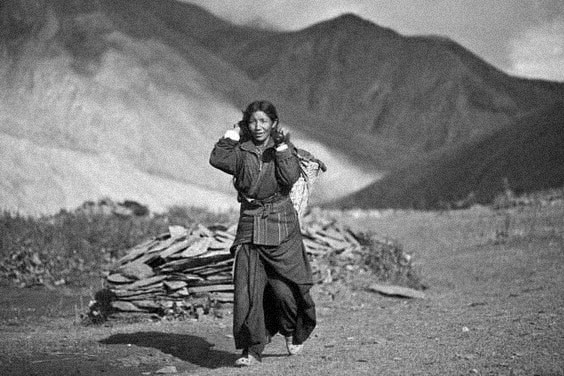
Dolpo: Secret Shelter
People of Dolpo live in the extremely remote villages of Nepal’s western highlands. Their lifestyle is not influenced by modernity and is close to a primitive one. Their lives depend on seasonal farming and petty trades; the people of Dolpo have accepted poverty in a way. However, even in such tough circumstances, Dolponians have proved to be the most content people on earth. Though a restricted region for tourists, Dolpo witnesses a few passionate travelers seeking unique cultural and natural experiences who wholeheartedly pay a heavy permit fee to explore Dolpo.

Dolpo (standard Tibetan: དོལ་པོ) is a high-altitude Tibetan cultural region in the upper-western part of Nepal, bordering the Ngari region of Tibet to the north. This remote region preserves Tibetan culture in its relatively pure form and has an irresistible appeal to Westerners. Dolpo was also the location for the 1999 Oscar-nominated film The Himalayas.
Dolpo is an area that is still inaccessible to travelers, and it is an adventure to enter this hidden land. The high mountains and valleys are so treacherous that it is still not accessible by road, and it takes days to walk from either Nepal or Tibet to reach it.
With Tibetan Buddhism predominating in the area, there are also distinct traces of Bön (བོན). Bön encompasses the various religious traditions that existed here before the arrival of Buddhism from northern India, which gradually incorporated various teachings from Buddhist texts.
It is like the end of the world, suspended between the sky and the earth at the heart of the Himalaya – a lost heaven protected by untouchable mountains. In these almost forgotten valleys, no trees can be seen growing, and only a few fragile trees are attached to the hills.
Since the time of their ancestors, the people of Dolpo have lived in close exchange with neighboring Tibet: they traveled to Tibet to collect salt from the high-altitude lakes and offered grain from their crops in exchange.
The basis of the Dolpo economy is the salt trade between Nepal and Tibet. People rely on yak carts to transport grain to Tibet in the summer and then return to the mountains of Nepal with the salt for trade. In winter, salt can be exchanged for grain, and people use sheep, goats, or horses to carry it to the south in exchange for rice and maize.
The women of Dolpo work on the land; they own it and the houses. When a family has a daughter and a son, the land belongs to the daughter, not the son. The women work from dawn to dusk but do not seem particularly tired, perhaps because they work together. They sing, chat, and joke as they work.
After dusk, multiple waves of people enter family life, all sitting around a wooden floor covered with blankets and a fire. Most families have no electricity supply, and the energy they get from solar cells is only enough for a short time. As a result, they usually don’t stay up late, go to other rooms, or sleep around the cooker shortly after eating.
The Dolpo women describe their lives like this:
“Every morning, we collect goat and sheep milk.
When we have a lot of milk, we are happy.
We make butter, we make yogurt.
In the evening, we share it with our neighbors.
When there is a lot of farm work to do, we help each other.
It is a good time to share; it is a good time to have tea and talk.
We often get together and have a lot of fun.
At first glance, people might think we are dirty.
But our hearts are clear, our souls are light and happy.
Some people are rich and have a lot of things, but I honestly would rather stay here.
Our land is very precious, and if you work hard, it will give you something in return.
The land is passed down from generation to generation, and you will always have it.”
Dolpo has a very beautiful culture, but many people here don’t realize it. They love life in Kathmandu and no longer understand the local culture. Some Dolpo people have left home since childhood to study and live in Kathmandu or India to experience the modernity of the outside world. Those people who have drifted away from Dolpo, but their souls still remain here.