


Earth Day – Our Environmental Initiatives
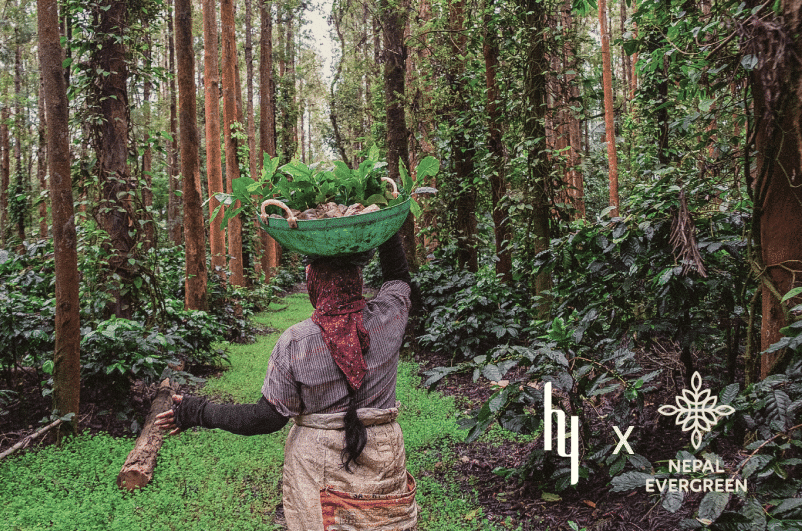
In our unwavering dedication to environmental conservation, HIMA JOMO ASSOCIATION is thrilled to announce our heartfelt collaboration with Nepal Evergreen, an extraordinary organisation committed to battling deforestation in the Himalayas through tree planting initiatives. Together, we embark on a profound journey, fuelled by passion and purpose, with the ultimate goal of building a lush forest in the heart of the Himalayas.

Since 2023, HIMA JOMO has been steadfast in our pledge to plant a tree in the Himalayas for every perfume purchase made, a testament to our deep-seated commitment to preserving the planet’s natural beauty. This initiative embodies the very essence of our brand – a harmonious blend of luxury and sustainability, where each fragrance not only captivates the senses but also nurtures the earth.
Nepal Evergreen stands as a beacon of hope in the face of environmental adversity, channeling the efforts of volunteers to plant trees and restore biodiversity in Nepal’s rural landscapes. Their tireless work encompasses a multitude of initiatives, from rebuilding schools to combating deforestation, all rooted in a shared vision of empowering local communities and safeguarding their connection to nature.

The challenges facing Nepal are daunting, with deforestation, mountain fires, and unsustainable agricultural practices threatening the delicate balance of ecosystems and livelihoods. Yet, in the midst of adversity, there lies an opportunity – an opportunity to heal the land, to uplift communities, and to forge a brighter future for generations to come.

The first batch of trees will be officially planted in July 2024. The diverse array of trees selected for planting – including avocado, pear, mandarin, coffee, Sichuan pepper, lemon, and walnut – symbolises the richness and diversity of the ecosystem we aspire to create. Through our collaboration with Nepal Evergreen, we are seizing this opportunity with determination, aiming to make a lasting impact on the Himalayan landscape.

Our collaboration with Nepal Evergreen is not just about planting trees – it’s about planting hope, fostering resilience, and sowing the seeds of change. Together, we are embarking on a transformative journey to rejuvenate the Himalayas, one tree at a time, aiming to build a lush forest in the heart of the Himalayas.
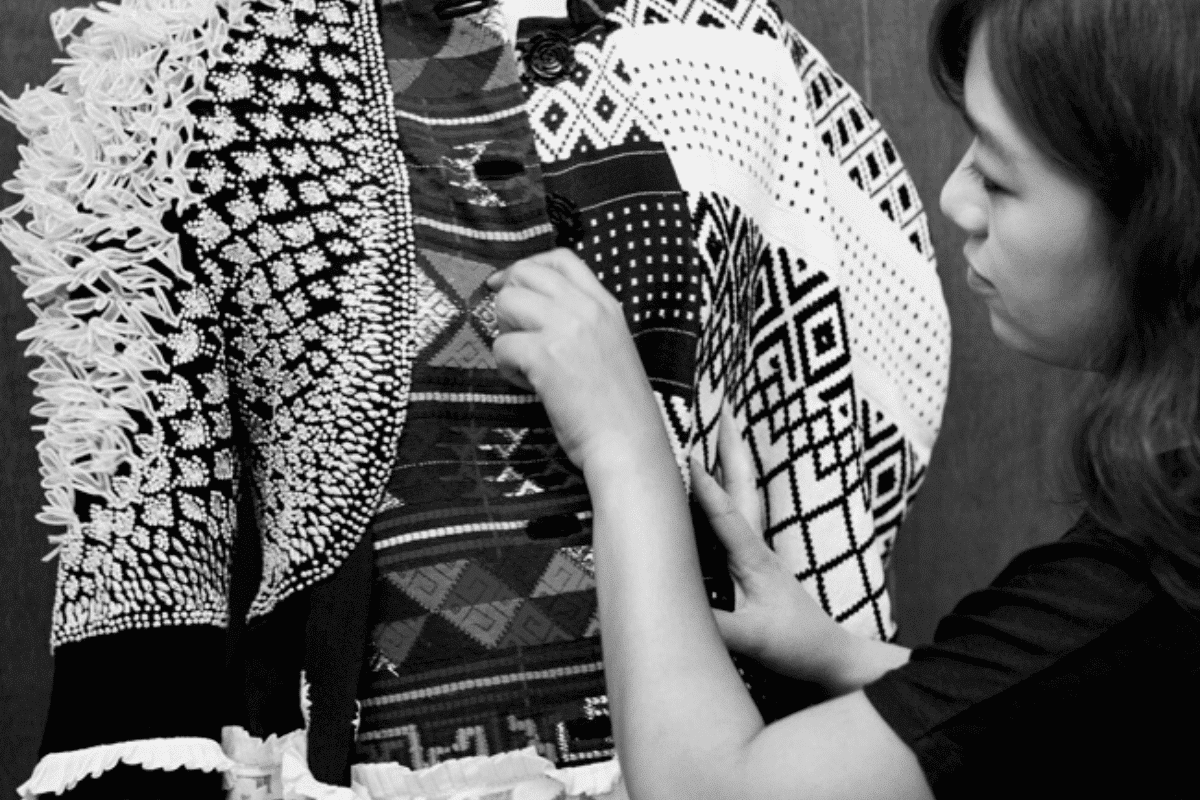
The Travelling Jacket
Five countries, five crafts, and one jacket.
In 2016, five designers from across South Asia came together to create what is now known as the traveling jacket. Although this jacket was created seven years ago, the story continues to serve as an inspiration of connectivity, and the jacket remains a portrayal of extraordinary synergy. Vogue India refers to it as the ‘metaphorical adventurer,’ and rightfully so, it was.
In the realm of fashion, where creativity and cultural expression intertwine, a remarkable creation has emerged: the traveling jacket, crafted by South Asian designers. This distinctive garment encapsulates the rich textile crafts of South Asian traditions, seamlessly blending them with contemporary design elements. As we delve into the story behind this sartorial marvel, we witness a celebration of diversity, artistry, and the power of fashion to bridge cultural divides.
India, New Delhi

The commencement began in India, New Delhi, where designer Rahul Mishra constructed the framework of the jacket using black fabric in his studio. He designated one of the shoulders and half of the bust area as his personal canvas to showcase his craft through detailed embroidery and unique lacework in white, reserving the remaining area for his fellow artists to portray their visions.
Sri Lanka, Colombo

The jacket started her first travel journey, progressing her way to Sri Lanka where designer Kanchana Thalpawila awaited in her studio in Colombo. With a few setbacks in the process and tightness in schedule, the designer and her team managed to push their way in completing their part on the due schedule. The Sri Lankan designer sourced her idea from the Royal costume of the kings and noblemen of Kandy and constructed round-shaped sleeves that resemble the trunk of a Sri Lankan elephant. She then incorporated the weaving technique known as Dumbara, native to the nation that dates back thousands of years, yet still retained the monogrammatic visual set by the first designer.
Bangladesh, Dhaka

After completing its second mission, the traveling jacket made its way to Dhaka, Bangladesh, to the studio of designer Humaira Khan, who awaited in excitement to compose her design on the jacket. The designer chose ‘Jamdani,’ a Bangladeshi textile which, in fact, is known to be one of the finest muslins woven in Bangladesh, and finally combined it with Dhaka cotton known as ‘taat,’ to finish her representation on the progressing jacket. Unfortunately, during that time, in her neighborhood, a terrorist attack took the lives of 20 people in a restaurant in Gulshan 2 and shook the city. Khan lost dear people she knew, and in her grief, she still stood strong and helped support her community in whatever ways she could. Before sending off the jacket that’s bound to travel, she embroidered along the edge, ‘Love is Humanity,’ in their native language, Bangla.
By now, the traveling jacket has been embedded with deep messages and sentiments that speak beyond tangibility.
Nepal, Kathmandu

The jacket then directed her way toward the Himalayas where designer Aayusha Shrestha resides in Kathmandu, Nepal. The city at that time was still healing from calamities caused by the earthquake the year before. Since Shrestha is a jewelry designer, she worked her way around in accessorizing the garment with a hand-crafted belt and buttons. Inspired by the lotus motif that symbolizes spiritual enlightenment in Buddhism and Hinduism, she worked with traditional Nepali metal craftsmen to craft the belt. The designer collected animal waste, like the horns of sacrificed animals for religious ceremonies, and had them carved out as buttons by the master craftsmen. She said It was her way of showing respect to the animals that had been sacrificed for the sins of human beings.
Bhutan, Paro


The Himalayan Cedar
The Himalayan cedar, scientifically known as Cedrus deodara, is a remarkable tree species that flourishes in the western Himalayas. Revered for its grandeur and elegance, this evergreen conifer holds significant cultural, ecological, and economic value.
This majestic tree has captivated the hearts of explorers, poets, and nature enthusiasts for centuries with its enchanting presence, aromatic fragrance, and enduring qualities that make it a symbol of strength and grace. Native to the western Himalayas, including Afghanistan, India (Jammu and Kashmir, Himachal Pradesh), Pakistan, and Nepal, the Himalayan cedar thrives in the high-altitude regions of these areas. Standing tall at heights of up to 50 meters (165 feet), with a broad and glorious canopy, this tree symbolizes strength and resilience.

The most striking feature of the Himalayan cedar is its dense, dark green foliage that remains vibrant throughout the year. Its long and slender needles are arranged in clusters, giving the tree a soft and graceful appearance. During spring, the Himalayan cedar adorns itself with delicate, light brown cones that mature and release their seeds over time.
The practical uses of the Himalayan cedar are equally noteworthy. The wood of this tree is highly valued for its durability, fine grain, and resistance to decay. It is commonly employed in construction, furniture crafting, and the production of musical instruments. The wood’s aromatic properties also make it a popular choice for manufacturing incense and essential oils. Moreover, the resin obtained from the Himalayan cedar has long been used for its medicinal properties. Traditional Ayurvedic medicine utilizes it to treat various ailments, including respiratory disorders, arthritis, and skin conditions. The essential oil derived from the tree is known for its soothing and calming effects, making it a sought-after ingredient in aromatherapy.
Beyond its visual appeal, the Himalayan cedar plays a vital role in maintaining the fragile mountain ecosystems of the western Himalayas. The cedar forests are home to rich biodiversity, providing habitats for a variety of plant and animal species. Its extensive root system aids in preventing soil erosion, preserving fragile mountain slopes, and maintaining the delicate balance of the ecosystem. However, the Himalayan cedar faces challenges due to deforestation and habitat loss, and unregulated logging and land conversion for agriculture pose significant threats to its survival. As we continue to face environmental challenges, the preservation of these forests becomes crucial for the well-being of our planet and future generations.
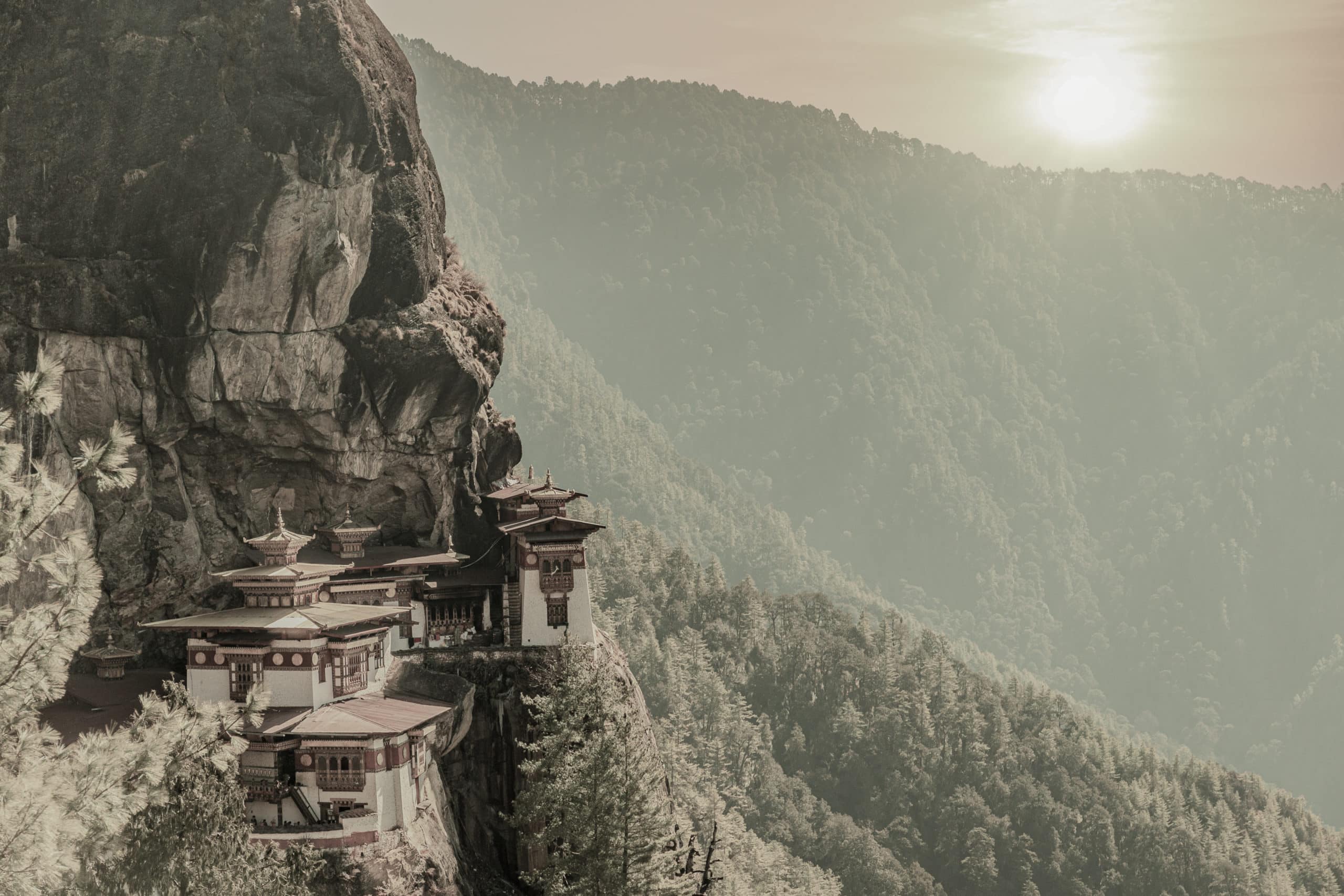
Earth Day with a Himalayan Kingdom
Earth Day, a cherished moment that comes each year on April twenty-second, is a worldwide communion of hearts, minds, and hands, united in a shared reverence for our planet’s splendor. It is a time when people from all walks of life join in a harmonious symphony of awareness, raising their voices in a chorus of concern for Mother Earth. Rekindling our sense of wonder and awe for the Earth’s majesty, from the soaring heights of the mountains to the depths of the seas, from the vibrant colors of the forests to the fragile beauty of a blooming flower. A day to cherish the richness of biodiversity that graces our planet and to recognize the interconnectedness of all living beings, bound together in a delicate web of life.
Today, we draw our attention to a Himalayan nation that shines as a model for its unwavering commitment to protecting and preserving the environment. Bhutan is a small landlocked country perched in the Eastern Himalayas, and Earth Day takes on a unique significance as it aligns with Bhutan’s holistic approach to development, which emphasizes the principles of Gross National Happiness (GNH).
Bhutan, often referred to as the “Land of the Thunder Dragon,” is known for its stunning landscapes, rich biodiversity, and unique cultural heritage. The Bhutanese people have a deep spiritual connection with nature, and the country has a strong tradition of environmental stewardship, rooted in its philosophy of GNH. This development paradigm was introduced by the fourth king of Bhutan, King Jigme Singye Wangchuck, in the 1970s, with the belief that economic development should be balanced with social, cultural, and environmental well-being. One of the key pillars of Bhutan’s GNH philosophy is ‘environmental conservation,’ and the country has set an ambitious target to remain carbon-neutral and to maintain at least 60% forest coverage for all time, as enshrined in its constitution. Currently, the nation has a forest coverage of over 70%, making it one of the few countries in the world with a net carbon sink. The country has also taken a bold step to go 100% organic in its agricultural practices, thereby promoting sustainable farming and reducing the use of harmful chemicals.
Earth Day in Bhutan is celebrated with a series of events that highlight the importance of environmental conservation and sustainability. These events include tree plantation drives, clean-up campaigns, awareness workshops, and cultural performances that promote Bhutan’s unique heritage and close relationship with nature. Bhutanese people, from the young to the old, actively participate in these activities, showcasing their deep-rooted commitment to protecting the environment and preserving the country’s natural resources for future generations.
In addition to its efforts in environmental conservation, Bhutan has also adopted innovative policies and practices that promote sustainability and well-being in other areas of development. Bhutan’s unique approach to measuring progress through the Gross National Happiness Index, which takes into account not only economic indicators but also social, cultural, and environmental factors, serves as a model for holistic and sustainable development. Bhutan has also adopted a policy of high-value, low-volume tourism, which prioritizes cultural preservation and environmental protection over mass tourism, helping to minimize the negative impacts of tourism on the environment, thus incorporating the concept of eco-tourism.
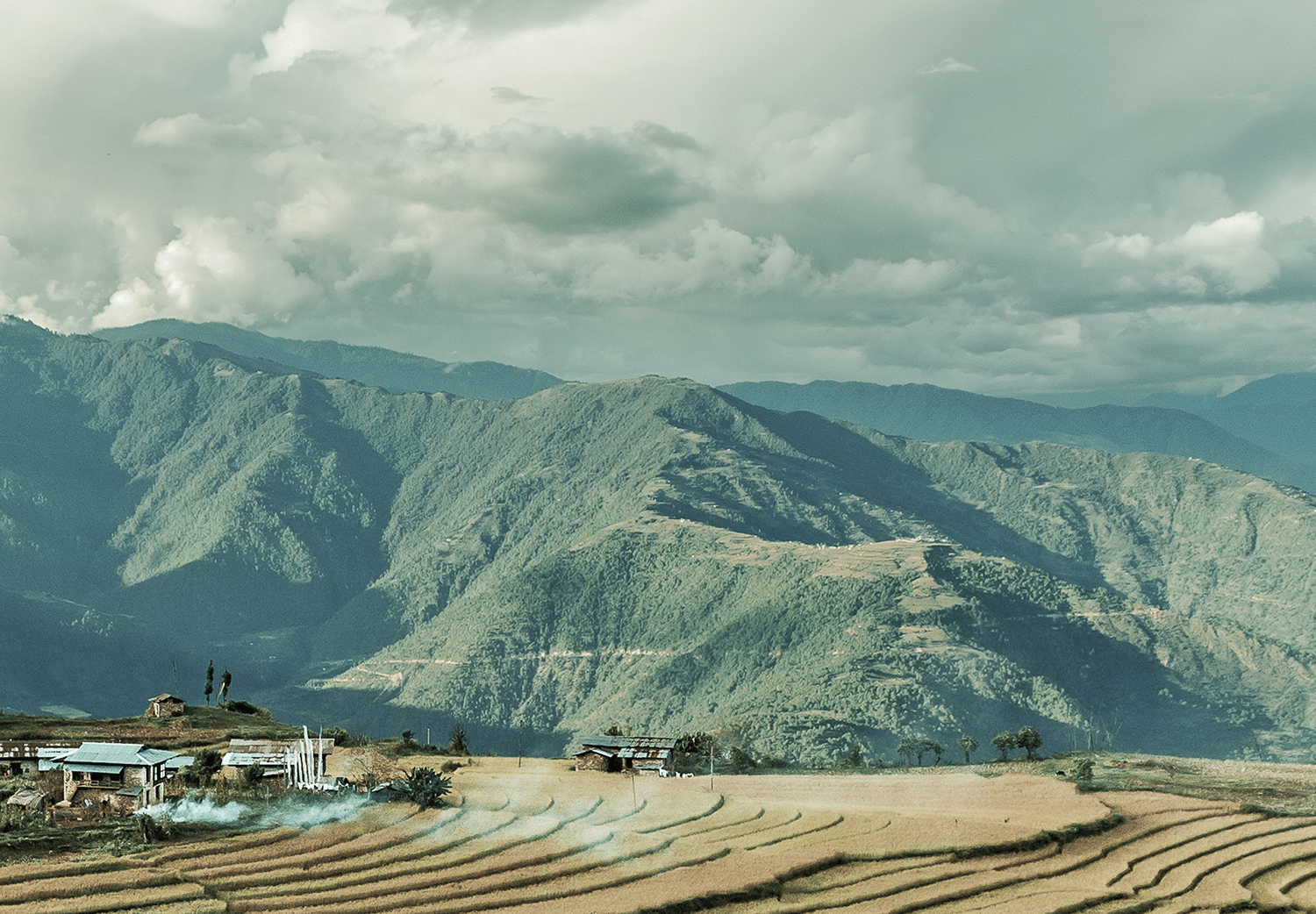
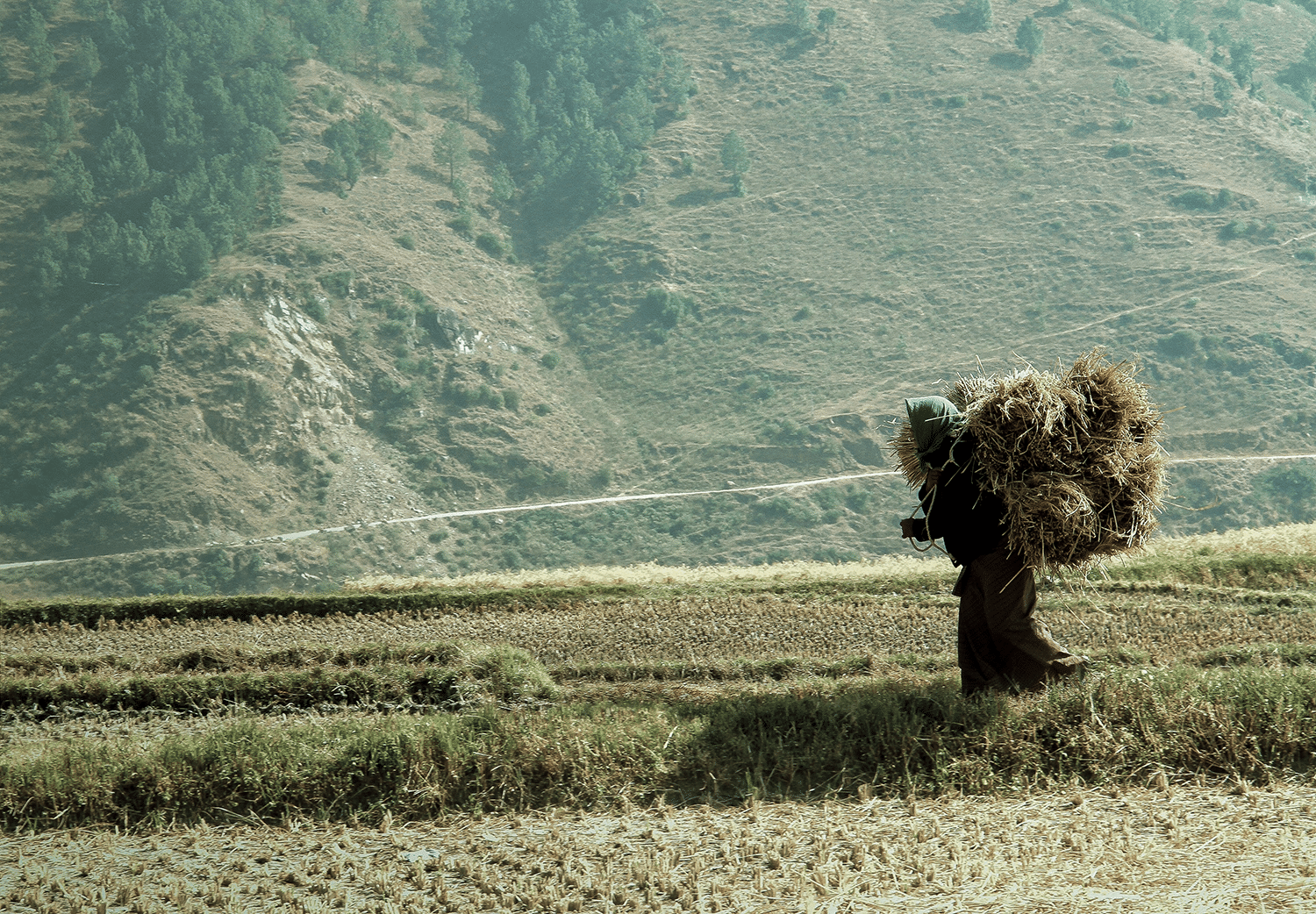
Furthermore, the kingdom has been a vocal advocate for global environmental issues, particularly in the context of climate change. Bhutan has consistently emphasized the importance of adopting sustainable development practices and reducing greenhouse gas emissions at various international forums, including the United Nations Framework Convention on Climate Change. Bhutan’s commitment to environmental conservation has been recognized internationally, thus making this tiny nation a profound example the rest of the world could look up to.
Earth Day is a moment of introspection, a time to reflect on our collective impact on the environment and our responsibility to safeguard it, reminding us of our inherent connection to the Earth. It is a call to action, inspiring individuals, communities, and nations to take meaningful steps toward environmental conservation and sustainability. A day to take stock of our actions and to strive towards making positive changes that will protect our planet for generations to come.
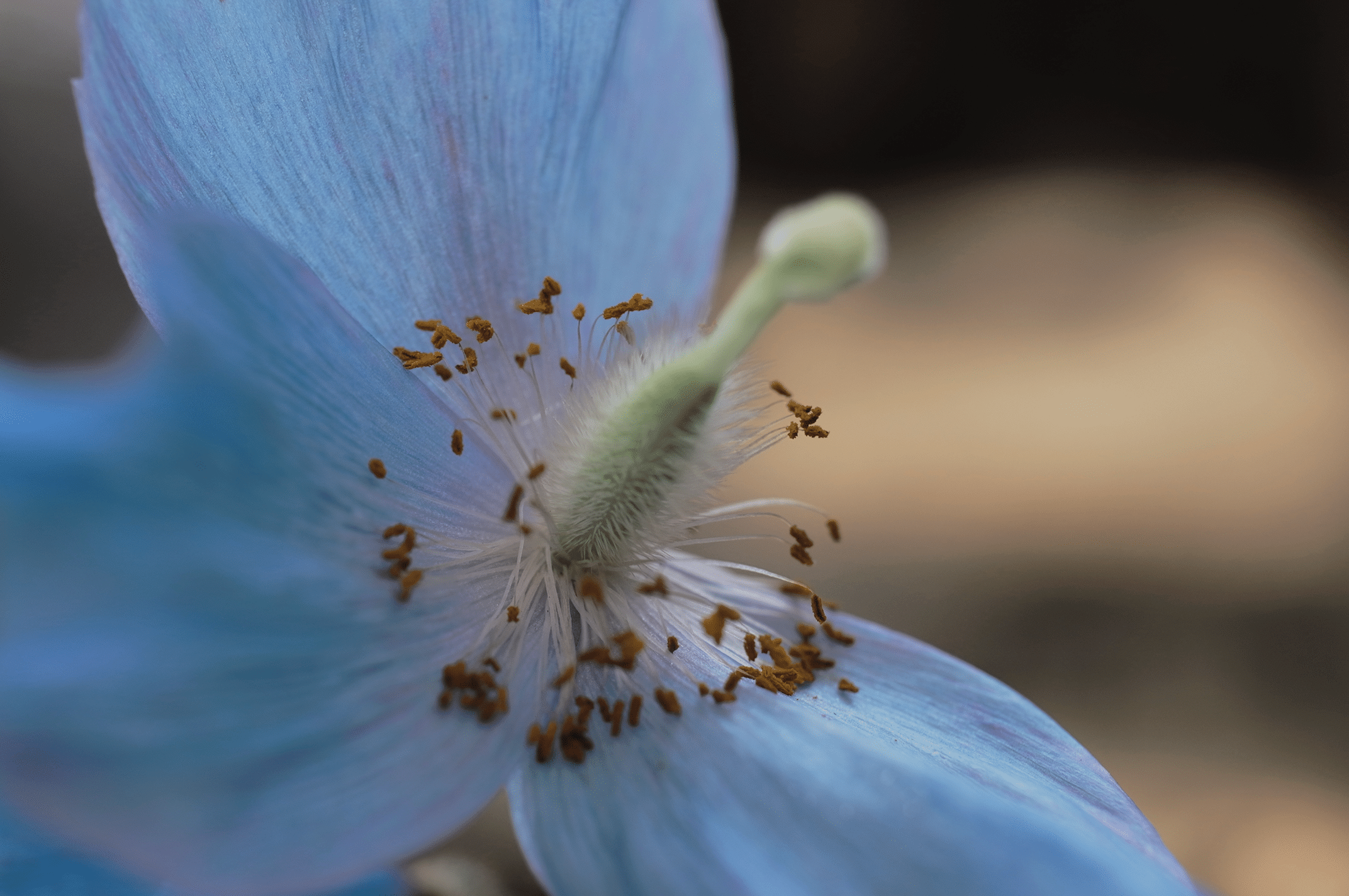
The blue poppy of the Himalayas
We live in the astonishing reality where flowers exist, portraying extraordinary shades of colors from nature. 300,000 and more live to tell the tale of their existence which are encircled around the world under various habitations, and their findings can go on and on. Yet just for today, the spotlight is on one special kind, a flower that lives in the seclusion of the nature that surrounds her, while her existence sits at the edge of the passing world. Simply known as the blue poppy but its color speaks silent poetry.
Native to the Himalayas, Meconopsis betonicifolia, known as the Himalayan blue poppy, is a perennial plant part of the prestigious family of Papaveraceae and is a member of the 70 species of the Meconopsis genus. Disguised like poppy flowers because of their similar physical features, although they are large showy flowers, which are magnificently blue or violet-blue in color and can measure up to 7-10 centimeters in diameter. The petals are papery and delicate, and the flowers themselves are borne on tall, slender stems that can reach up to 1 meter in height. They flourish only in high-altitude regions in cool and moist environments, generally, in the late spring season, and are typically found growing in open meadows, rocky slopes, and along rivers. Its rare disposition makes it a precious jewel for gardeners to grow, leaving them to aspire more as this flower speaks languages of mysteries unheard of, where one can only dream to hear her true stories.
A recent discovery was made in the kingdom of Bhutan as they celebrated their national flower, the blue poppy, which was re-identified to be an entirely new species of the blue poppy family. Hence it was renamed to Meconopsis gakyidiana derived from the national language Dzongkha “gakyid” which means happiness, tributing to the unique concept of GNH (Gross National Happiness). In addition to more happiness, two more species of blue poppies were discovered in the outlining regions of Bhutan.

The whole existence of this species is exciting and wondrous, and it is said to symbolize potential and possibility. However, the continuation of its being stays vulnerable to earthly changes. Nature has its way of making you feel things, the discoveries can go on, but if nature decides its journey, we only get to view it like words in an old book. The rarity of this blue species lay in the edges of our dreams, like the muse of an artist, and one would hope to glance at her someday, but that day must be when one decides to step on their journey to the Himalayas and beyond.

Khoma, the Sound of Weaving
A collective thumping sound echoes in the village of Khoma with the wake-up call from their local roasters.
The village of Khoma in the region of Lhuntshe in Bhutan is still an active weaving community whose history lies in the depths of the textiles that were created and are still being woven solely by the women of the community. Bhutan celebrates its textile craftsmanship to this day as the country mandates the wearing of the national attire ‘Gho’ for men and ‘Kira’ for women, which are largely woven on a back-strap loom, hence the practice of this craft is spread across the country.
The weaving community of Khoma is one of the extraordinary villages in Bhutan, where it is apparent that weaving textiles is a lifestyle they’ve adopted and a means of expression. Every single woman from this village is naturally brought up learning and practicing this craft conventionally through kindred bonds with their mothers. It is also known that they specialize in a certain technique of weaving known as the Kishuthara (silk on silk textile) which involves weaving supplementary weft patterns with extra yarns over the constructed base yarn, generally using silk yarn as the base and silk again for constructing the patterns and motifs known as ‘trima’.

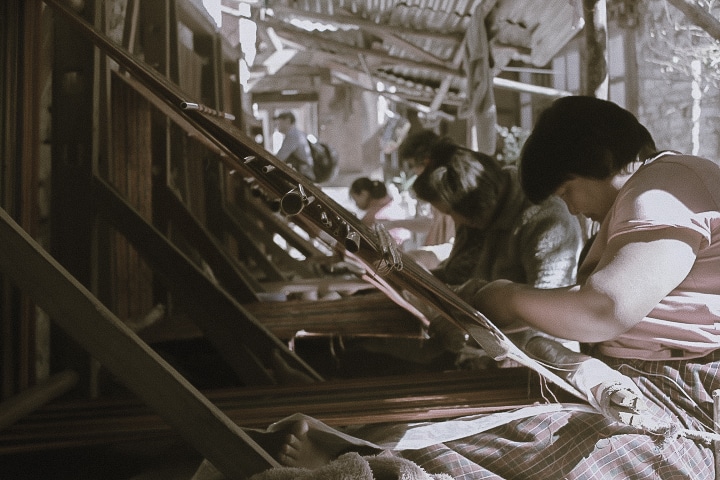
Several women in that community have mastered the art of weaving Kishuthara which takes years of practice and the rest of the women express aspirations to master it someday. Oral traditions and folksongs indicate that this intricate technique of back-strap loom was introduced by Chinese Princess Wencheng, known to the locals as ‘Ashi Jyazum’, back in the 7th century, and traces of her life remain as stories and heritage for Khoma.
Khoma alludes to a mundane atmosphere of village life mended with a reflection of solitude as the women concentrate on their crafts for hours. The first thing you hear after the break of dawn is the thumping sound of weaving echoing around the village as the sun embraces the valley. Several groups of looms are installed together making the sound of weaving stronger. Due to the long hours invested in weaving complex textiles, the locals express that they enjoy doing it together in groups, sharing a mutual bond and comfort. A life lived slowly, a craft through slowness, and a tradition preserved.

Photography and words by Yeshey Choden – Commissioned by hima jomo
Discover Ladakh: The Land of High Passes
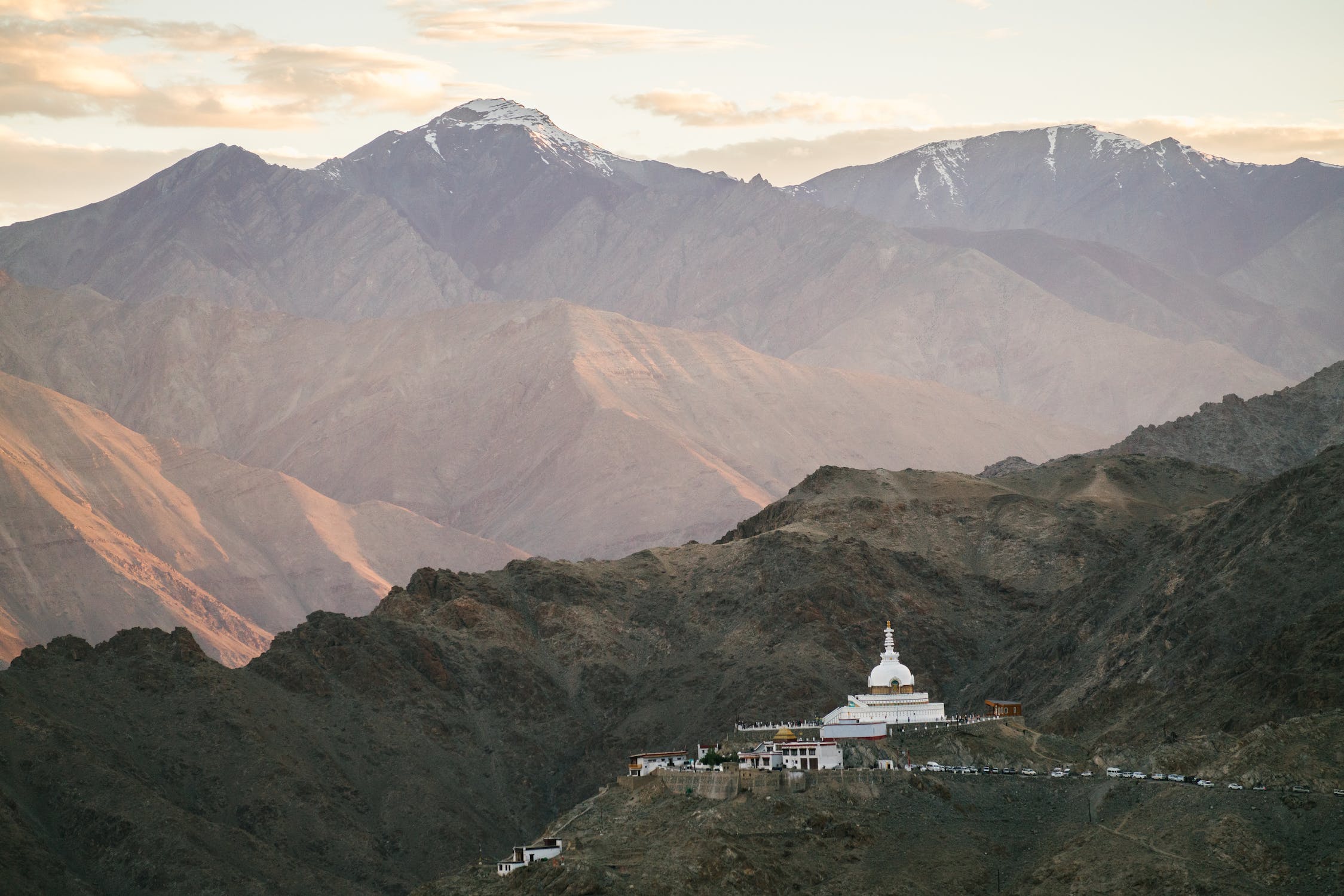
India is known globally for its vibrant and bustling megacities, but in its northern reaches lie the mountains and valleys of Ladakh, a name that means the land of high passes. Indeed, Ladakh is the highest plateau in India, with most of the land hovering above 3,000 m (9,800 ft.) in elevation. The region, which covers approximately 117,000 square kilometers, offers a remote escape, a cultural melting pot, and an opportunity to imagine life in a bygone era.
Ladakh extends from the Himalayan Ranges to the Kunlun and encompasses the upper Indus River valley. In the present day, Ladakh borders the southwest corner of Xinjiang and Karakoram Pass to the north, Tibet to the east, the Lahaul and Spiti regions to the south, and the Jammu and Baltiyul regions to the west.
The striking peaks of Ladakh, which have long acted as natural borders, were formed over 45 million years ago as the Indian plate was thrust into the more stationary Eurasian plate. Ladakh’s four mountain ranges—the Himalayan, Zanskar, Ladakh, and Karakoram ranges—form a labyrinth of jagged, snow-capped peaks. The region is also home to the Siachen glacier, the largest to exist outside the world’s polar regions, vast azure lakes such as Tso Moriri, and a network of riverways that sustain life in a seemingly barren landscape.
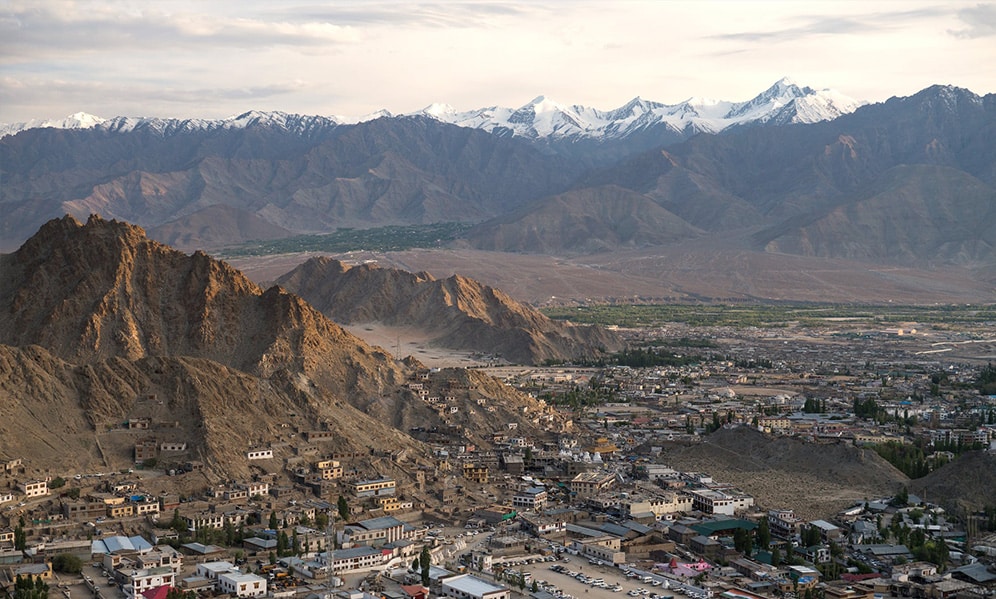

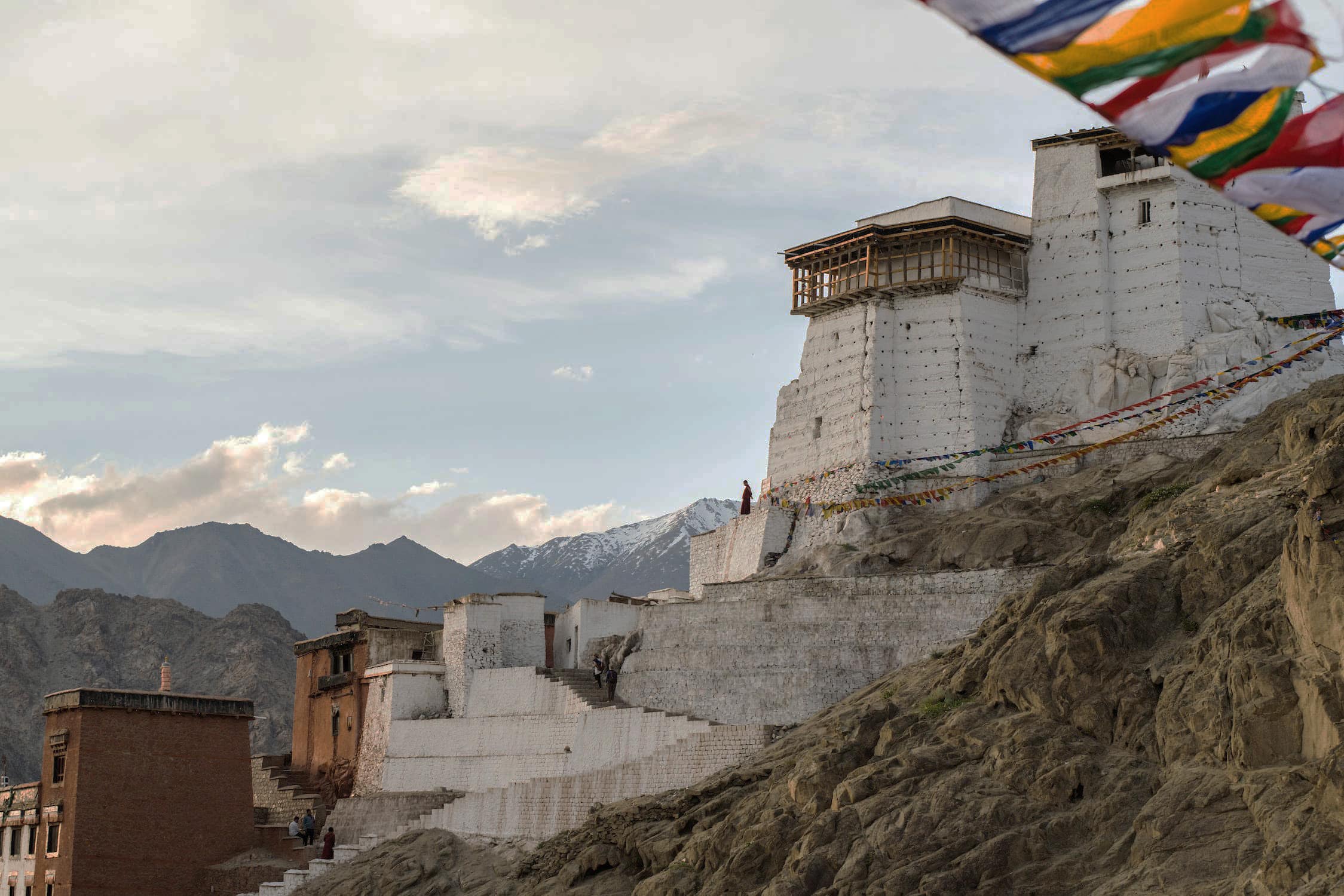
Home to approximately 300,000 people, Ladakh is one of the most sparsely populated regions of India. Leh is both the largest city and present-day capital of Ladakh. It was also the historic capital of the Kingdom of Ladakh, which was ruled from Leh Palace. The palace, which was built in the same style and era as Tibet’s Potala Palace, has been restored in recent years to preserve Ladakhi history and enlighten the region’s visitors. Beyond cities like Leh or Kargil, exist small villages where life revolves around farming and shepherding. Some of these villages still exist deep in mountain valleys without paved roads, requiring a day or more of walking to reach.
Traversing mountain passes has long been a part of life in Ladakh. Historically, Ladakh held a strategic position at the crossroads of important trade routes. Trans-Himalayan caravans would pass through this center of commerce and culture to trade salt, grain, cashmere, indigo, silk, and other precious goods.
With Lhasa only 1,500 km away, it should come as no surprise that there are strong cultural ties between Tibet and Ladakh. Shared traits include ethnicity, religion (Vajrayana Buddhism), crops like barley, and drinks like butter tea and chhang. Since the 13th century, Tibetan people began to migrate and settle in Ladakh, but it’s worth noting that Buddhism originated in India and spread to Tibet via Kashmir and Ladakh. Today, it is still common to see prayer flags fluttering above white monasteries resting high upon Ladakhi foothills.
Words by Trixie Pacis – Commissioned by hima jomo
Lamali Paper Making
From tree bark to Nepalese Lamali Paper Making
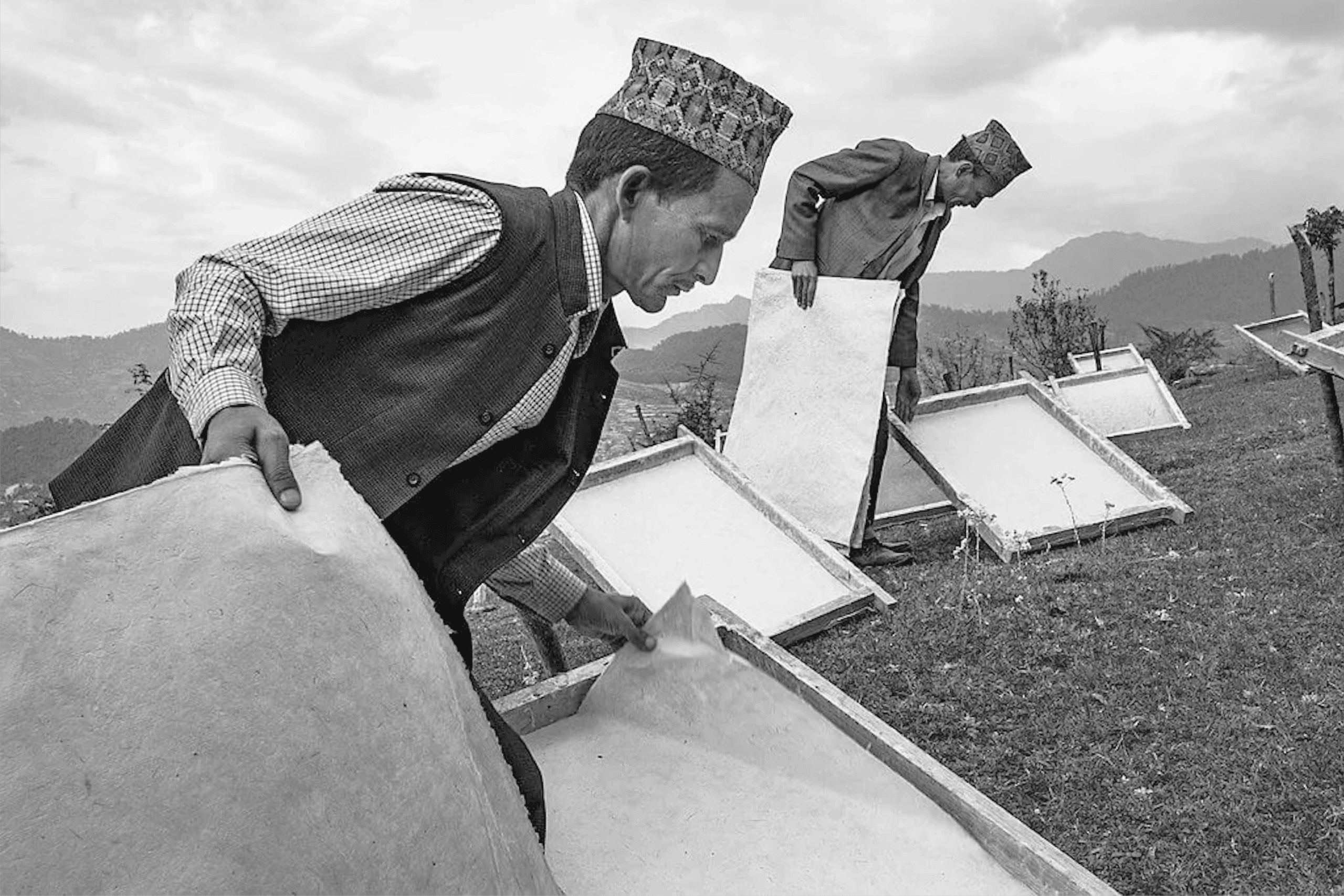
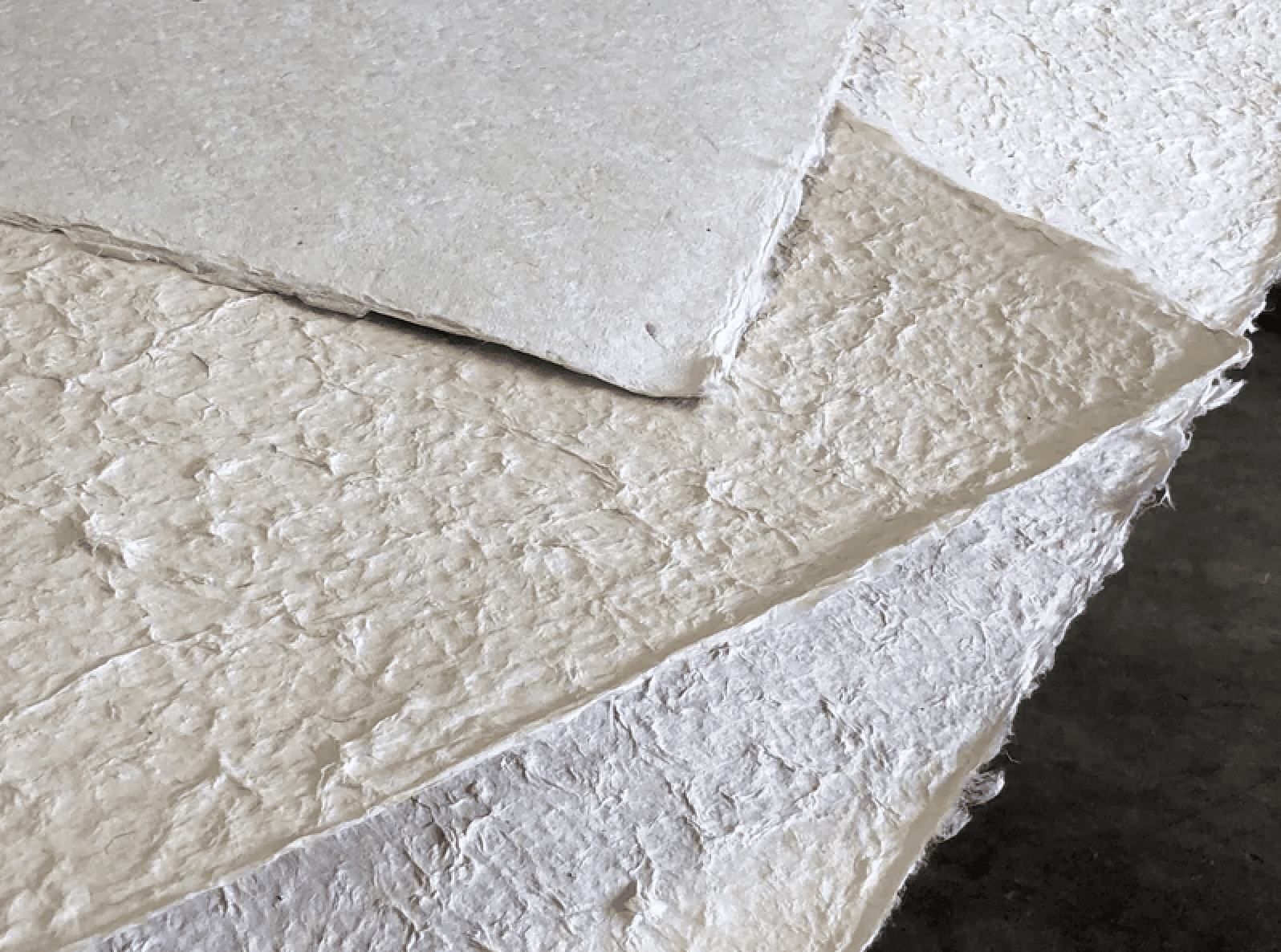
Our ancestors communicated with one another by carving drawings and symbols onto cave walls, tree bark, and clay tablets — but everything changed with the invention of paper. About 2,000 years ago, a Chinese court official named Ts’ai Lun produced the first piece of paper in the city of Lei-Yang. He made pulp by mashing mulberry bark, hemp, and rags then laying the mixture out in the sun to dry. The craft of papermaking gradually traveled across Asia, the Middle East, Europe, and the Americas. Although the general process for producing paper is the same, cultures around the world have used different fibers and developed unique paper-making techniques; Lamali paper of Nepal is no exception.
Lamali paper is made by hand in the mountain regions of Nepal. Historically, paper makers were concentrated in rural regions and most notably in the Baglung District, in Nepal’s Gandaki province. Paper makers use the inner bark of the indigenous lokta bush, a name that encompasses both Daphne Cannabina and Daphne Papyracea. Lokta bushes are evergreen shrubs with white flowers that flourish on the slopes of Himalayan forests. The bush grows at elevations between 1,600 – 4,000 m (5,250 – 13,000 feet) and can reach a height of 5 meters (15 feet). The lokta bush produces strong fibers that make it the perfect source material for paper.

Five Millenia of Asian Art at Paris’ Musée Guimet
Works of art that have survived the test of time offer us clues about the history and culture of past generations and civilizations. Some of these works are housed at the Guimet Asian Arts Museum in Paris, France. The Musée Guimet is one of the largest collections of Asian art in the world—not to mention the only museum of its kind in Europe. Though lesser-known compared to the likes of The Louvre, this museum is a treasure trove that holds 5,000 years of Asian art under one roof.

The Power of a Thangka Painting
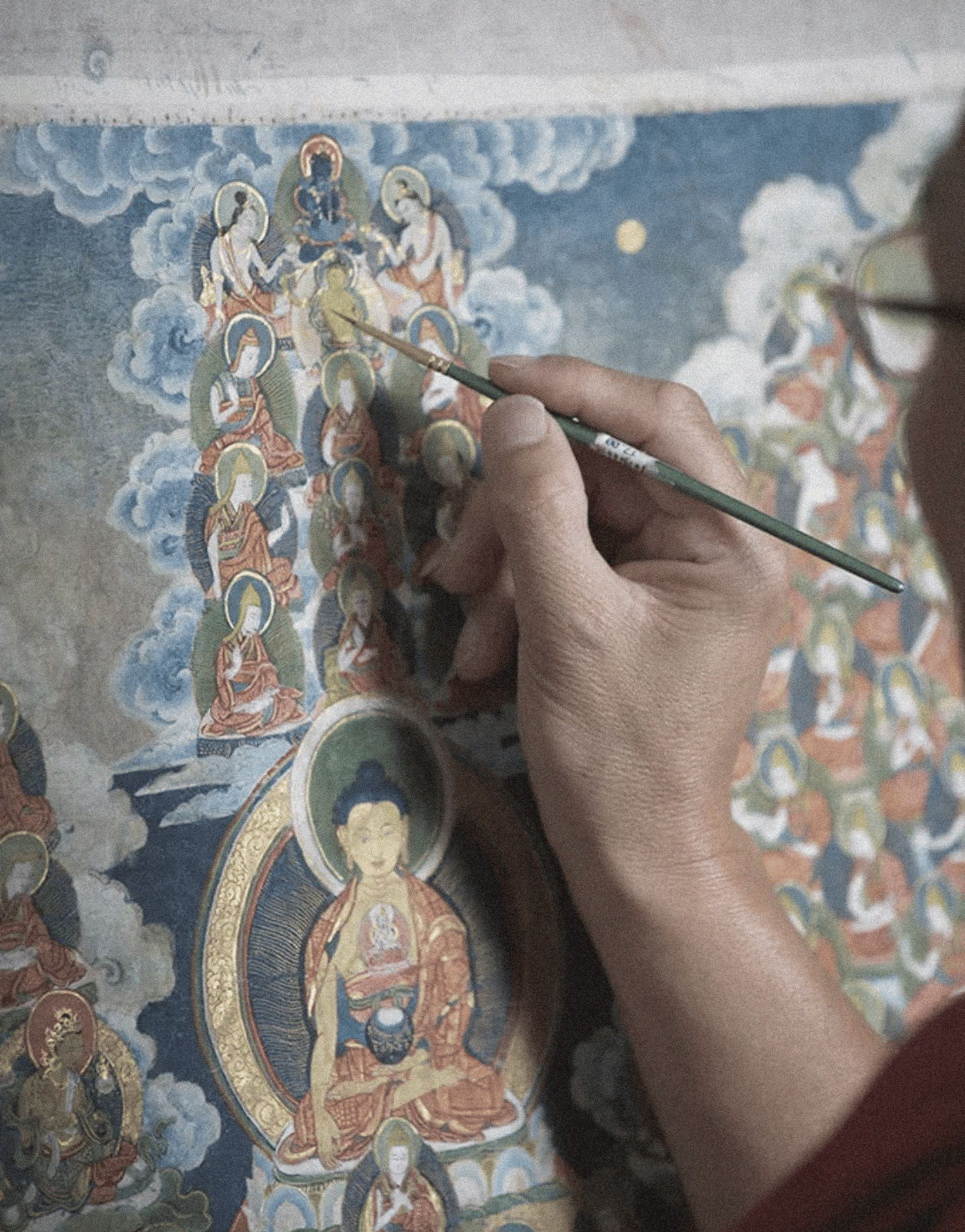
To travelers and collectors, thangkas are vibrant paintings of deities, but to Tibetans, they are the buddhas themselves. Thangkas are a distinctly Tibetan form of art centered around religious figures and symbols. They are hand-painted by Tibetan artists and Buddhist monks who have devoted years to studying.
According to Tibetan lore, thangkas date back to the time of Sakyamuni Buddha. King Uttrayana of Dadok commissioned a painting of the Buddha as a gift to King Bimbisara of Magadha, but when the painters started to paint Sakyamuni Buddha, his holy light blinded them. They completed the painting by observing his reflection in water, and by capturing the Buddha’s reflection, the painters also captured some of his spirit.
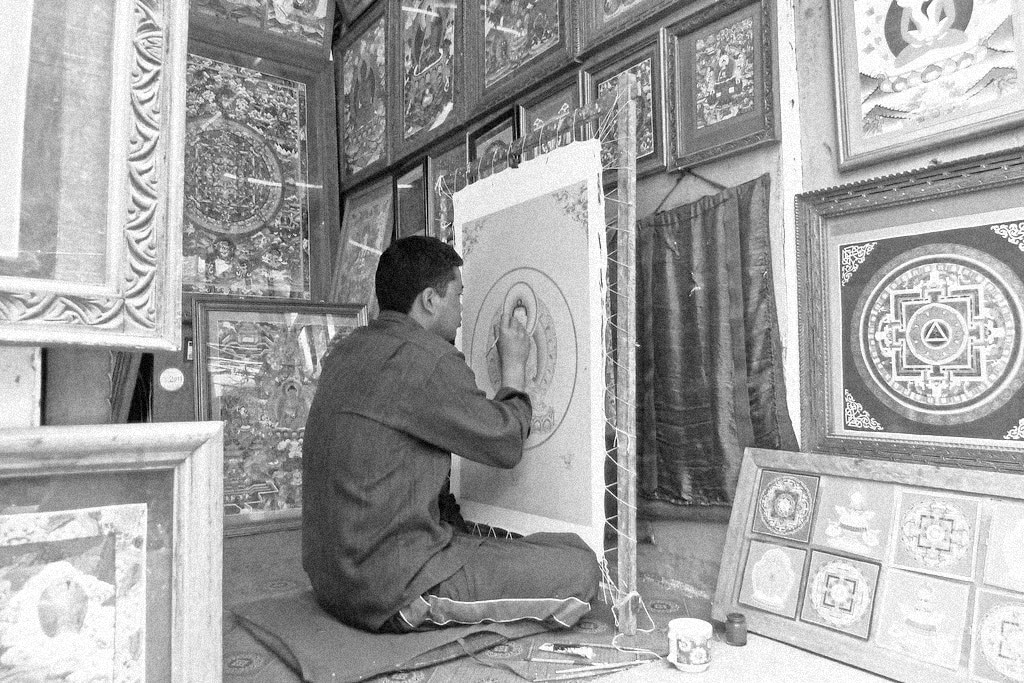
Today, at least twenty thangkas are known to date back to the 11th and 12th centuries. The tradition is rooted in the early paintings surviving in the Ajanta Caves and Mogao Caves of China, where thangka painting developed alongside Buddhist wall paintings. The painting of thangkas spread wherever Tibetan Buddhism was practiced, including Ladakh, Arunachal Pradesh, Mongolia, and other parts of the Himalayas.
Thangkas usually depict religious figures such as Buddha, Buddhist deities, bodhisattvas (enlightened beings), and teachers. They can also depict Buddhist teachings, events, scripture, and symbols, such as the Bhavachakra (the Wheel of Life). When painting a thangka, it is crucial to depict deities in appropriate body postures (asanas), hand gestures (mudras), and proportions (iconometry). Upholding age-old traditions and painting each brushstroke with intention is important because thangkas are viewed as a form of visual scripture. It can take a painter years to learn the iconometrics, stories, and characteristics of different figures. While some elements of a thangka follow clear-cut rules, a painter has total creative freedom when it comes to other decorative elements such as landscapes and backgrounds.
Before a thangka is painted, painters first purify themselves and their environment by washing their hands and lighting incense. They stretch white fabric across a frame and apply white gesso (a type of primer) or chalk. They burnish the surface with a smooth stone, then outline the image in black or red ink, paint the background black or red, then add the central figure. Final touches are made as the painting is gilded or embellished with gold leaf and mounted on silk.
A thangka is not complete until the consecration ritual. Monks chant, pray, and invoke the deity depicted in the thangka. The deity’s eyes are “opened” as the pupils are painted, and the words om ah hum (body, mind, spirit) are inscribed on the back. Upon consecration, the thangka is not just a painting; it houses the spirit of the depicted deity.
With intricate designs that require hours of artistry, most thangkas are the work of many hands. They are commonly overseen by a master painter who oversees the production of the work and handles the intricate brushwork while allowing students to contribute. To satisfy the commercial demand, some thangkas intended for non-religious use are produced through a combination of hand painting and machine printing.