




Tibetan Incense Making
It is impossible to envision Himalayan homes and temples without the swirling smoke or aromatic scent of incense. Despite being a relatively inexpensive everyday item, incense holds significant value in the Tibetan way of life for centuries. Rooted in the Latin word incendere, meaning “set fire to,” and the Middle English word encens, meaning “sweet-smelling substance,” incense releases fragrant smoke when burned for meditation, ceremonies, relaxation, or purification. A plume of smoke rising from burning incense ignites the senses of sight and smell while evoking something spiritual within.

The history of incense spans over 6,000 years, originating from ancient civilizations like Egypt and Mesopotamia. Adopted by various cultures, Tibetan incense-making has endured for over a thousand years as part of the broader tradition of Tibetan medicine, emphasizing natural remedies for holistic healing.
Tibetan incense, found in Tibet, Nepal, and Bhutan, is meticulously handcrafted using pure organic materials, often with earthy notes. Traditional recipes sourced from ancient Vedic texts remain unchanged, with fragrant woods like sandalwood, agarwood, pine, or cedar serving as primary ingredients. Herbs, spices, and botanicals further enhance the aroma.
Widely practiced globally, burning incense clears negative energy, aids relaxation, and enhances meditation. Its use in religious ceremonies elevates prayers, while incorporating it into daily routines promotes well-being. Beyond spiritual significance, incense doubles as a natural air freshener and bug repellent, offering a gentle timer as it burns.


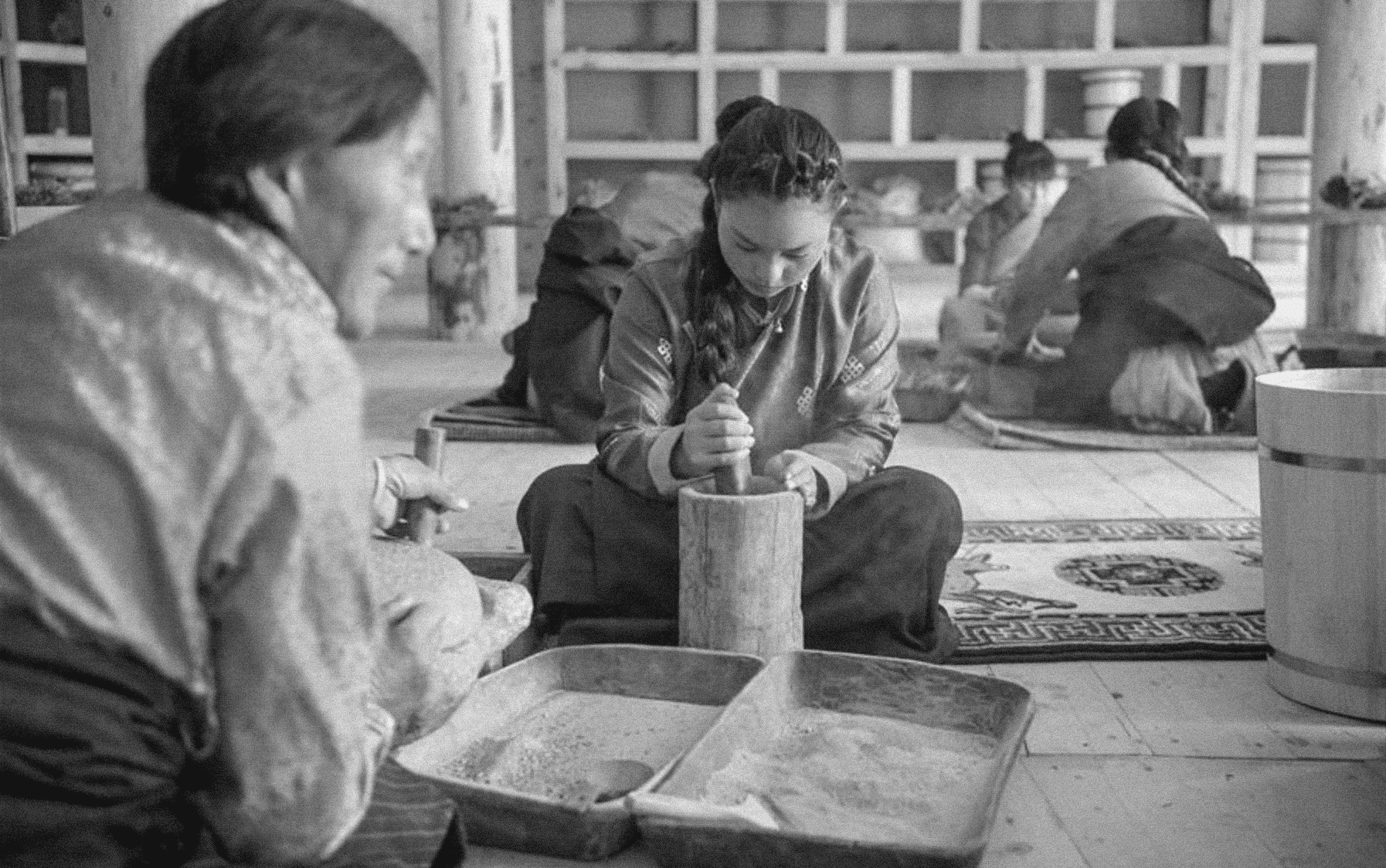
Those who use Tibetan incense appreciate the craftsmanship behind it; after all, it is a practice that takes decades to learn and requires a lifetime of devotion. Unlike previous generations, one no longer needs to be a Buddhist monk to produce incense. In the heart of Shambhala, at the Aba Tibetan and Qiang Autonomous Prefecture, an incense maker named Parkyid has been studying Tibetan medicine and incense-making for twenty years under his teacher Lobsang Tenzin and has ambitions to start his own incense-making business.
Parkyid makes incense using traditional methods to harvest raw materials from the mountains and produce incense by hand. He makes several arduous trips to collect ingredients that grow wild in the foothills of Yala Snow Mountain, one of the four holy mountains in the Garze region. In addition to navigating challenging terrain and fickle weather, he must be able to identify and distinguish hundreds of plants as each one offers unique scents and medicinal properties. Different parts of the same plant, such as the flower or stem, may be used for Tibetan incense-making. Some recipes even call for the same plant picked in different seasons. The entire process is rooted in Parkyid’s deep understanding and respect for the ingredients and the environment in which they flourish.
Once collected, Parkyid grinds the materials into a paste using water and stones. He avoids the use of machines as they produce higher temperatures; this preserves the fragrance and medicinal qualities of the chosen ingredients. Parkyid uses a hollow ox horn with a narrow opening to pipe the paste into long, even strands. Unlike incense from other parts of the world, Tibetan incense does not have a bamboo stick at the center. Once the incense has dried, the strands are bundled, and the process is complete.

The next time you light incense, take a deep breath. Pause and reflect as the scent transports you to the Himalayas, where materials are still plucked by hand, and connects you to an age-old process. Then take a moment to appreciate the work of dedicated craftspeople, like Parkyid, who ensure that the tradition of Tibetan incense-making endures for centuries to come.
Nepal's Honey Hunters
In the misty foothills of the Himalayas, honey hunters risk their lives harvesting wild honey from vertical cliffs as their ancestors have done for centuries. This wild honey is known for its amber color and slightly bitter taste. Also known as ‘mad honey’, it is highly prized for medicinal properties believed to relieve hypertension, provide a burst of energy, or work as a sweet substitute for Viagra. Consuming this honey can cause reactions ranging from a slowed heartbeat and hallucinations to temporary paralysis and unconsciousness. Risk not only lies in consuming this honey, but also in harvesting it.
The harvest takes place twice a year in tandem with spring and autumn festivals. The practice is tightly interwoven with Himalayan culture and beliefs. The honey hunters of Nepal must first perform a ceremony for the cliff gods to pray for safety and forgiveness from the bees. A ceremony commonly involves offerings of fruit, flowers, rice, and sheep.
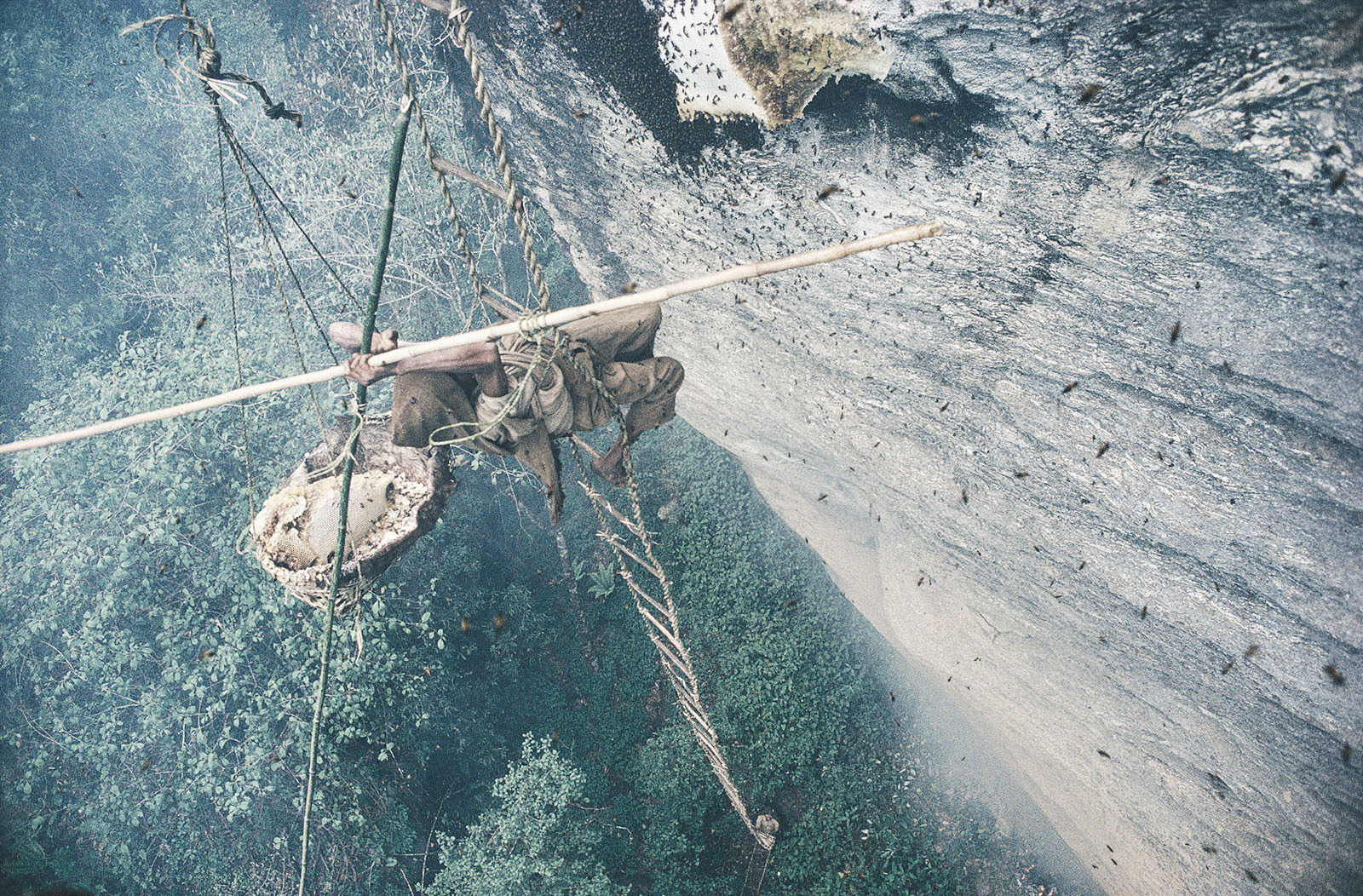
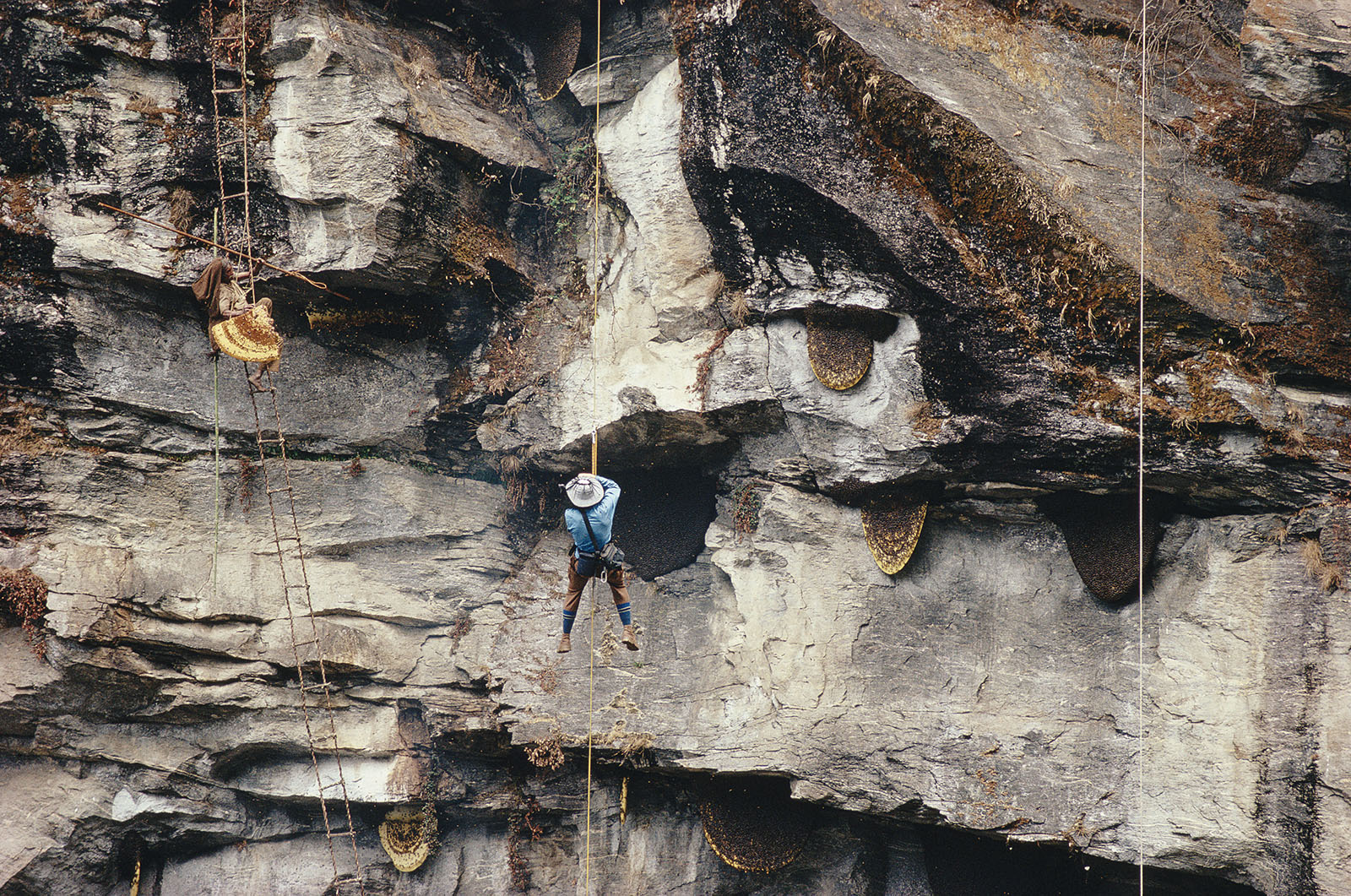
The hunt begins as hand-spun rope ladders are flung down upon sheer cliffs from above, enabling barefoot hunters to reach the precariously perched hives of Apis Laboriosa, the world’s largest honey bee. Smoke is used to disorient thousands of irate bees that must be coaxed to leave their nests. The smoke helps, but there is no way for a hunter to escape the inevitability of being stung.


Blood, bites, and blisters are synonymous with the hunt. Honey hunters muster the courage to invade the hives with a sharp bamboo implement called a ‘tango’ in one hand and the rope ladder in the other. Untethered and suspended at dizzying heights, the lives of these honey hunters depend on their ability to contend with swarming bees while cutting away blocks of precious honeycomb and lowering them to the ground in delicate woven baskets.
Once the honey is harvested, the hunters thank the bees and pray that the colony flourishes so that the practice may continue for generations to come. Much of the honey is destined to travel to Kathmandu, where it is sold to customers around the globe. But some of the bounty is divided and shared by those who have gone to unfathomable heights to harvest it.
With the demand for wild honey growing, harvesting honey has become a steady source of income for the honey hunters, but recent reports show that this once-plentiful nectar is dwindling just as fast. Ratna Thapa, senior bee scientist at Tribhuvan University in Kathmandu, says, “Every year there is a 70% decline in the Himalayan cliff honeybee population.” The rapidly declining bee population poses an immediate threat to the honey hunters and their traditional way of life.
Stories of the honey hunters of Nepal and their plight have spread across the globe. In 2013, documentary travel photographer Andrew Newey spent two weeks living with the Gurung people of central Nepal in a remote region untouched by tourism to document a three-day autumn hunt. In 2018, National Geographic produced a short documentary film called The Last Honey Hunter in partnership with a local organization called the dZi Foundation. The film’s gravity-defying scenes take viewers on a hunt with Kulung culture in Nepal’s Hongu river valley. Powerful stories such as these offer a rare window and emotional connection to an ancient Himalayan tradition on the brink of extinction.
Photography by Eric Valli
Words by Trixie Pacis – Commissioned by hima jomo
Dolpo: Secret Shelter
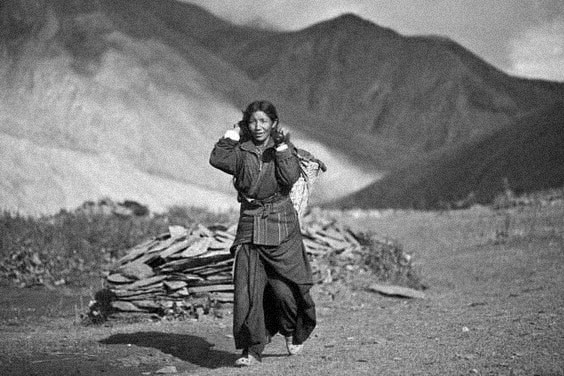
People of Dolpo live in the extremely remote villages of Nepal’s western highlands. Their lifestyle is not influenced by modernity and is close to a primitive one. Their lives depend on seasonal farming and petty trades; the people of Dolpo have accepted poverty in a way. However, even in such tough circumstances, Dolponians have proved to be the most content people on earth. Though a restricted region for tourists, Dolpo witnesses a few passionate travelers seeking unique cultural and natural experiences who wholeheartedly pay a heavy permit fee to explore Dolpo.

Dolpo (standard Tibetan: དོལ་པོ) is a high-altitude Tibetan cultural region in the upper-western part of Nepal, bordering the Ngari region of Tibet to the north. This remote region preserves Tibetan culture in its relatively pure form and has an irresistible appeal to Westerners. Dolpo was also the location for the 1999 Oscar-nominated film The Himalayas.
Dolpo is an area that is still inaccessible to travelers, and it is an adventure to enter this hidden land. The high mountains and valleys are so treacherous that it is still not accessible by road, and it takes days to walk from either Nepal or Tibet to reach it.
With Tibetan Buddhism predominating in the area, there are also distinct traces of Bön (བོན). Bön encompasses the various religious traditions that existed here before the arrival of Buddhism from northern India, which gradually incorporated various teachings from Buddhist texts.
It is like the end of the world, suspended between the sky and the earth at the heart of the Himalaya – a lost heaven protected by untouchable mountains. In these almost forgotten valleys, no trees can be seen growing, and only a few fragile trees are attached to the hills.
Since the time of their ancestors, the people of Dolpo have lived in close exchange with neighboring Tibet: they traveled to Tibet to collect salt from the high-altitude lakes and offered grain from their crops in exchange.
The basis of the Dolpo economy is the salt trade between Nepal and Tibet. People rely on yak carts to transport grain to Tibet in the summer and then return to the mountains of Nepal with the salt for trade. In winter, salt can be exchanged for grain, and people use sheep, goats, or horses to carry it to the south in exchange for rice and maize.
The women of Dolpo work on the land; they own it and the houses. When a family has a daughter and a son, the land belongs to the daughter, not the son. The women work from dawn to dusk but do not seem particularly tired, perhaps because they work together. They sing, chat, and joke as they work.
After dusk, multiple waves of people enter family life, all sitting around a wooden floor covered with blankets and a fire. Most families have no electricity supply, and the energy they get from solar cells is only enough for a short time. As a result, they usually don’t stay up late, go to other rooms, or sleep around the cooker shortly after eating.
The Dolpo women describe their lives like this:
“Every morning, we collect goat and sheep milk.
When we have a lot of milk, we are happy.
We make butter, we make yogurt.
In the evening, we share it with our neighbors.
When there is a lot of farm work to do, we help each other.
It is a good time to share; it is a good time to have tea and talk.
We often get together and have a lot of fun.
At first glance, people might think we are dirty.
But our hearts are clear, our souls are light and happy.
Some people are rich and have a lot of things, but I honestly would rather stay here.
Our land is very precious, and if you work hard, it will give you something in return.
The land is passed down from generation to generation, and you will always have it.”
Dolpo has a very beautiful culture, but many people here don’t realize it. They love life in Kathmandu and no longer understand the local culture. Some Dolpo people have left home since childhood to study and live in Kathmandu or India to experience the modernity of the outside world. Those people who have drifted away from Dolpo, but their souls still remain here.
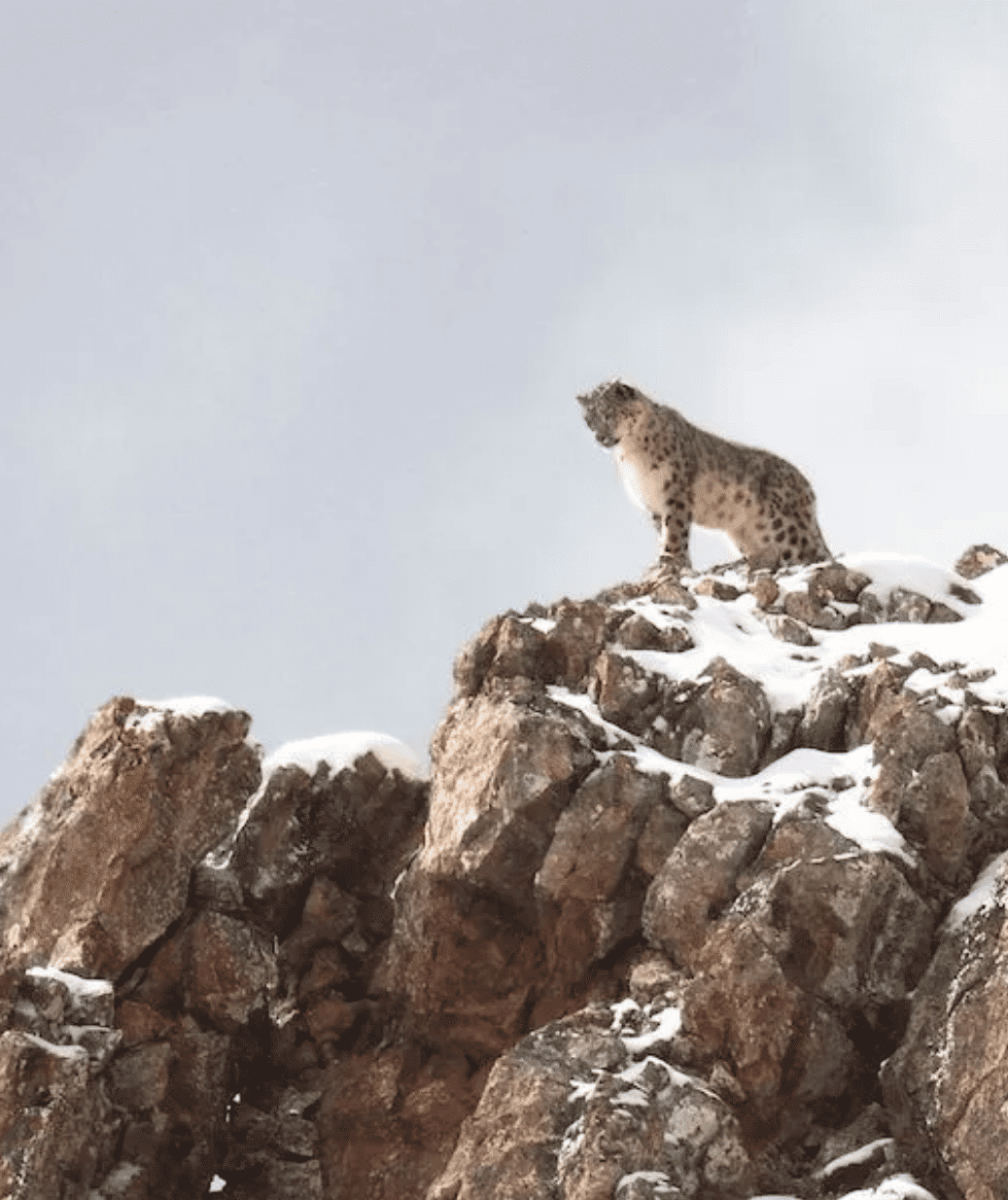
The Velvet Queen (La panthère des neiges)
In the heart of the Tibetan highlands, photographer Vincent Munier brings writer Sylvain Tesson on his quest to find the snow leopard. He introduces him to the subtle art of waiting from a blind spot, tracking animals, and finding the patience to catch sight of the beasts.
Through their journey in the Tibetan peaks, inhabited by invisible presences, the two men engage in a conversation on our place among living beings and celebrate the beauty of the world.


The Himalayas: Source of life for half the world’s population
One glance at the mighty landscape and towering snow-peaks, and we are mesmerized forever. Stunning mountains, dense temperate forests, dazzling snow reflecting the sunlight, deep alluring chasms, winding rivers, rich varied biodiversity, and innumerable legends; all these describe the incredible Himalayas. ‘Hima’ meaning snow and ‘Alaya’ meaning ‘abode’ in Sanskrit, the mountains are a major part of the lives of Tibetans, Indians, Nepalis, and many others who live in proximity to these grand mountains.

Whether it’s the Shivaliks (the foothills of the mountains) or the highest peaks (Mount Everest, Kanchenjunga, and others), the Himalayas have inspired poets, fascinated tourists, and sustained more than half the earth’s population.
A Source of Livelihood
According to the World Wildlife Federation (WWF), the combined drainage basin of the Himalayas is home to some 3 billion people in 18 countries, almost half the world’s population. The mountain range is the source of 6 of Asia’s great rivers, including the Yangtze, Indus, and Ganges, and home to thousands of species of animals and plants. The importance of perennial rivers like the Ganges and Brahmaputra is well-known, and billions depend on the great Himalayan basin for agriculture. With nearly 15,000 glaciers, several lakes, streams, and small rivers, this range hosts the source of livelihood for countless people.
Biodiversity of the Himalayan Range – Flora
The Himalayan range is a unique geographical area where rich biodiversity exists. There is a permanent ‘snow line’ at the highest altitude which gives rise to perennial rivers like the Ganges and the Brahmaputra. The altitude, rainfall, and soil conditions along with snow result in distinct and diverse flora and fauna.
Oak forests, Pine forests, apple trees, dwarf pomegranate trees, orchids, deodar trees, blue bamboos, coral berry plants, Himalayan birches, and several herbal plants are found here…
Biodiversity of the Himalayan Range – Fauna
Whether it is the elusive endangered mountain snow leopard or the unique Himalayan marmot, these majestic mountains house a number of reptiles, mammals, birds, and insects like the Grey wolf, Tibetan fox, Eurasian lynx, Asian gold cat, Red panda, Grey langur, and Wood mouse apart from Jackdaws, Ravens, Bar-headed geese, and Peacocks which add colorful diversity and beauty to this region.
Two unique reptiles found here are the Indian Rock Python and Tibetan Spring snake.
Recently, the melting of glaciers and erosion of the soil of this mountain range have been a cause for concern for the entire world. Efforts to conserve the biodiversity and ecological balance of the Himalayas have been initiated on a global scale, with conservationists and scientists from various domains joining hands. It’s an endeavor that will have a great impact on the future of humankind itself since it will work towards the preservation of this beautiful region which is a giver of life to countless species, including human beings.
Words by Sterling Holidays