


Tibetan Incense Making
It is impossible to envision Himalayan homes and temples without the swirling smoke or aromatic scent of incense. Despite being a relatively inexpensive everyday item, incense holds significant value in the Tibetan way of life for centuries. Rooted in the Latin word incendere, meaning “set fire to,” and the Middle English word encens, meaning “sweet-smelling substance,” incense releases fragrant smoke when burned for meditation, ceremonies, relaxation, or purification. A plume of smoke rising from burning incense ignites the senses of sight and smell while evoking something spiritual within.

The history of incense spans over 6,000 years, originating from ancient civilizations like Egypt and Mesopotamia. Adopted by various cultures, Tibetan incense-making has endured for over a thousand years as part of the broader tradition of Tibetan medicine, emphasizing natural remedies for holistic healing.
Tibetan incense, found in Tibet, Nepal, and Bhutan, is meticulously handcrafted using pure organic materials, often with earthy notes. Traditional recipes sourced from ancient Vedic texts remain unchanged, with fragrant woods like sandalwood, agarwood, pine, or cedar serving as primary ingredients. Herbs, spices, and botanicals further enhance the aroma.
Widely practiced globally, burning incense clears negative energy, aids relaxation, and enhances meditation. Its use in religious ceremonies elevates prayers, while incorporating it into daily routines promotes well-being. Beyond spiritual significance, incense doubles as a natural air freshener and bug repellent, offering a gentle timer as it burns.


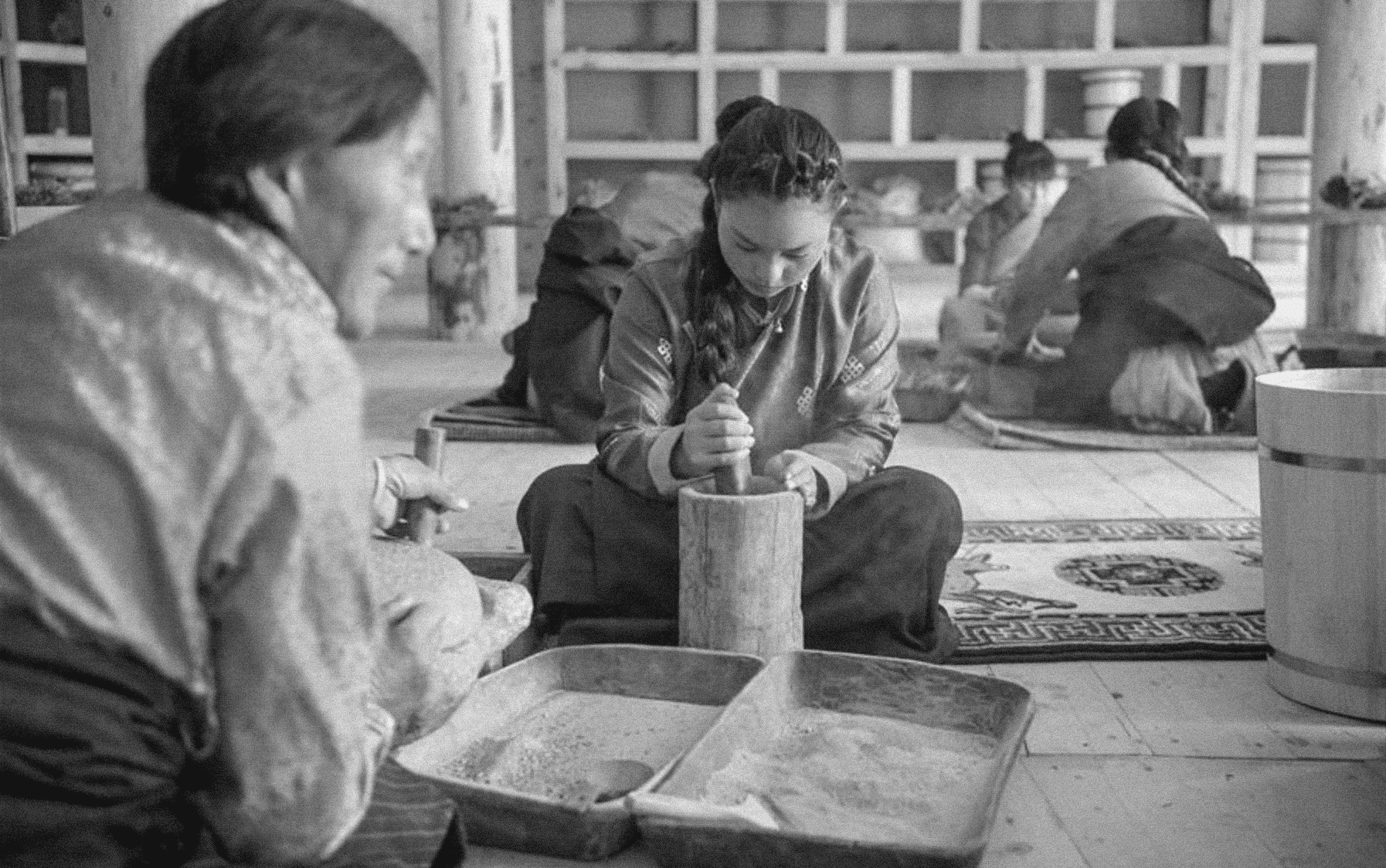
Those who use Tibetan incense appreciate the craftsmanship behind it; after all, it is a practice that takes decades to learn and requires a lifetime of devotion. Unlike previous generations, one no longer needs to be a Buddhist monk to produce incense. In the heart of Shambhala, at the Aba Tibetan and Qiang Autonomous Prefecture, an incense maker named Parkyid has been studying Tibetan medicine and incense-making for twenty years under his teacher Lobsang Tenzin and has ambitions to start his own incense-making business.
Parkyid makes incense using traditional methods to harvest raw materials from the mountains and produce incense by hand. He makes several arduous trips to collect ingredients that grow wild in the foothills of Yala Snow Mountain, one of the four holy mountains in the Garze region. In addition to navigating challenging terrain and fickle weather, he must be able to identify and distinguish hundreds of plants as each one offers unique scents and medicinal properties. Different parts of the same plant, such as the flower or stem, may be used for Tibetan incense-making. Some recipes even call for the same plant picked in different seasons. The entire process is rooted in Parkyid’s deep understanding and respect for the ingredients and the environment in which they flourish.
Once collected, Parkyid grinds the materials into a paste using water and stones. He avoids the use of machines as they produce higher temperatures; this preserves the fragrance and medicinal qualities of the chosen ingredients. Parkyid uses a hollow ox horn with a narrow opening to pipe the paste into long, even strands. Unlike incense from other parts of the world, Tibetan incense does not have a bamboo stick at the center. Once the incense has dried, the strands are bundled, and the process is complete.

The next time you light incense, take a deep breath. Pause and reflect as the scent transports you to the Himalayas, where materials are still plucked by hand, and connects you to an age-old process. Then take a moment to appreciate the work of dedicated craftspeople, like Parkyid, who ensure that the tradition of Tibetan incense-making endures for centuries to come.

Walking meditation - Joy of the moment with hima jomo
In monasteries deep in the Himalayas, monks walk in groups, quietly through the woods, listening to the sound of the wind blowing through the leaves, walking through the snow-clad land, listening to the soft sound of the snow against the soles of their shoes.

Walking helps us create a wonderful connection with our own senses. We come closer to inner peace, joy, and the present moment, allowing us to nourish our hearts and minds. Walking with awareness brings calm consciousness and a deep healing power.
First, open yourself: Adjust your breathing during the walk, gently lift your feet, and feel the sensation of a deep connection between your feet and the earth as they touch the ground.
Take little conscious walks: Most walks are almost automatic, largely oblivious to your surroundings. Take a little conscious walk, connecting with what is around you, observing the natural shapes and temperature of things or objects.
Try to focus your attention: Concentrate on the energy that travels from your feet to the ground and the energy given back to you by the earth. How does that connection between the heart and the earth make you feel? Are you willing to accept this feeling?
Continue to observe your surroundings: Feel the wind on your skin as you walk, the warmth of the sun, the sound of the stones under your feet, or the sobering smell of the earth around you after it rains. Remember to allow yourself to feel, to touch, and ponder what you are feeling. Are you happy or depressed, cool or warm?
The power of thoughts: You may notice that after a short period of time, your attention is quickly drawn to other thoughts, perhaps the thought of what you should have for dinner that day, or tomorrow’s schedule, or a memory. At this time, your connection with nature is weaker, and you may find it more difficult to pay attention to what is in front of you. Allow yourself to stay in this state and don’t let it get you down.
Bring back awareness: Try to bring back the awareness of your senses, feeling the connection between your left and right foot hitting the ground in harmony, transforming your thoughts into sensations. Focus on how you are feeling in this moment, realizing that life is so delicate and rich, that there is infinite beauty in nature to keep you company.
We all come from nature, and in the hustle and bustle of life, we sometimes forget the power of it.