




Earth Day – Our Environmental Initiatives
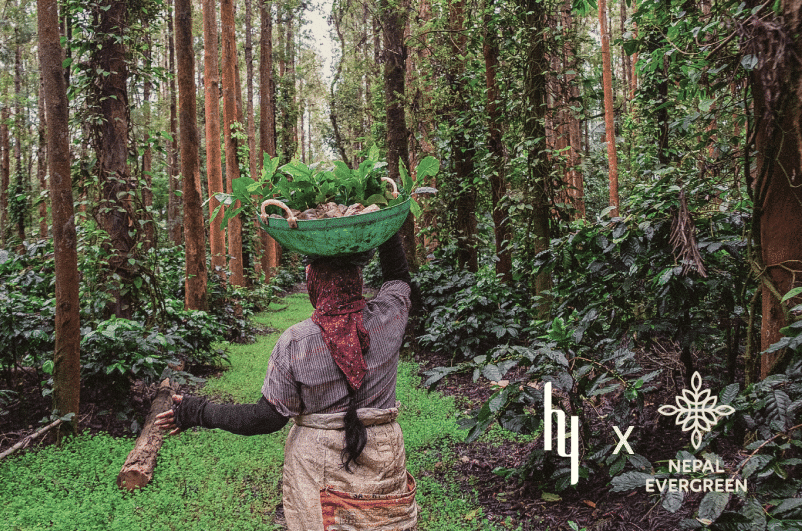
In our unwavering dedication to environmental conservation, HIMA JOMO ASSOCIATION is thrilled to announce our heartfelt collaboration with Nepal Evergreen, an extraordinary organisation committed to battling deforestation in the Himalayas through tree planting initiatives. Together, we embark on a profound journey, fuelled by passion and purpose, with the ultimate goal of building a lush forest in the heart of the Himalayas.

Since 2023, HIMA JOMO has been steadfast in our pledge to plant a tree in the Himalayas for every perfume purchase made, a testament to our deep-seated commitment to preserving the planet’s natural beauty. This initiative embodies the very essence of our brand – a harmonious blend of luxury and sustainability, where each fragrance not only captivates the senses but also nurtures the earth.
Nepal Evergreen stands as a beacon of hope in the face of environmental adversity, channeling the efforts of volunteers to plant trees and restore biodiversity in Nepal’s rural landscapes. Their tireless work encompasses a multitude of initiatives, from rebuilding schools to combating deforestation, all rooted in a shared vision of empowering local communities and safeguarding their connection to nature.

The challenges facing Nepal are daunting, with deforestation, mountain fires, and unsustainable agricultural practices threatening the delicate balance of ecosystems and livelihoods. Yet, in the midst of adversity, there lies an opportunity – an opportunity to heal the land, to uplift communities, and to forge a brighter future for generations to come.

The first batch of trees will be officially planted in July 2024. The diverse array of trees selected for planting – including avocado, pear, mandarin, coffee, Sichuan pepper, lemon, and walnut – symbolises the richness and diversity of the ecosystem we aspire to create. Through our collaboration with Nepal Evergreen, we are seizing this opportunity with determination, aiming to make a lasting impact on the Himalayan landscape.

Our collaboration with Nepal Evergreen is not just about planting trees – it’s about planting hope, fostering resilience, and sowing the seeds of change. Together, we are embarking on a transformative journey to rejuvenate the Himalayas, one tree at a time, aiming to build a lush forest in the heart of the Himalayas.
The blue poppy of the Himalayas
We live in the astonishing reality where flowers exist, portraying extraordinary shades of colors from nature. 300,000 and more live to tell the tale of their existence which are encircled around the world under various habitations, and their findings can go on and on. Yet just for today, the spotlight is on one special kind, a flower that lives in the seclusion of the nature that surrounds her, while her existence sits at the edge of the passing world. Simply known as the blue poppy but its color speaks silent poetry.
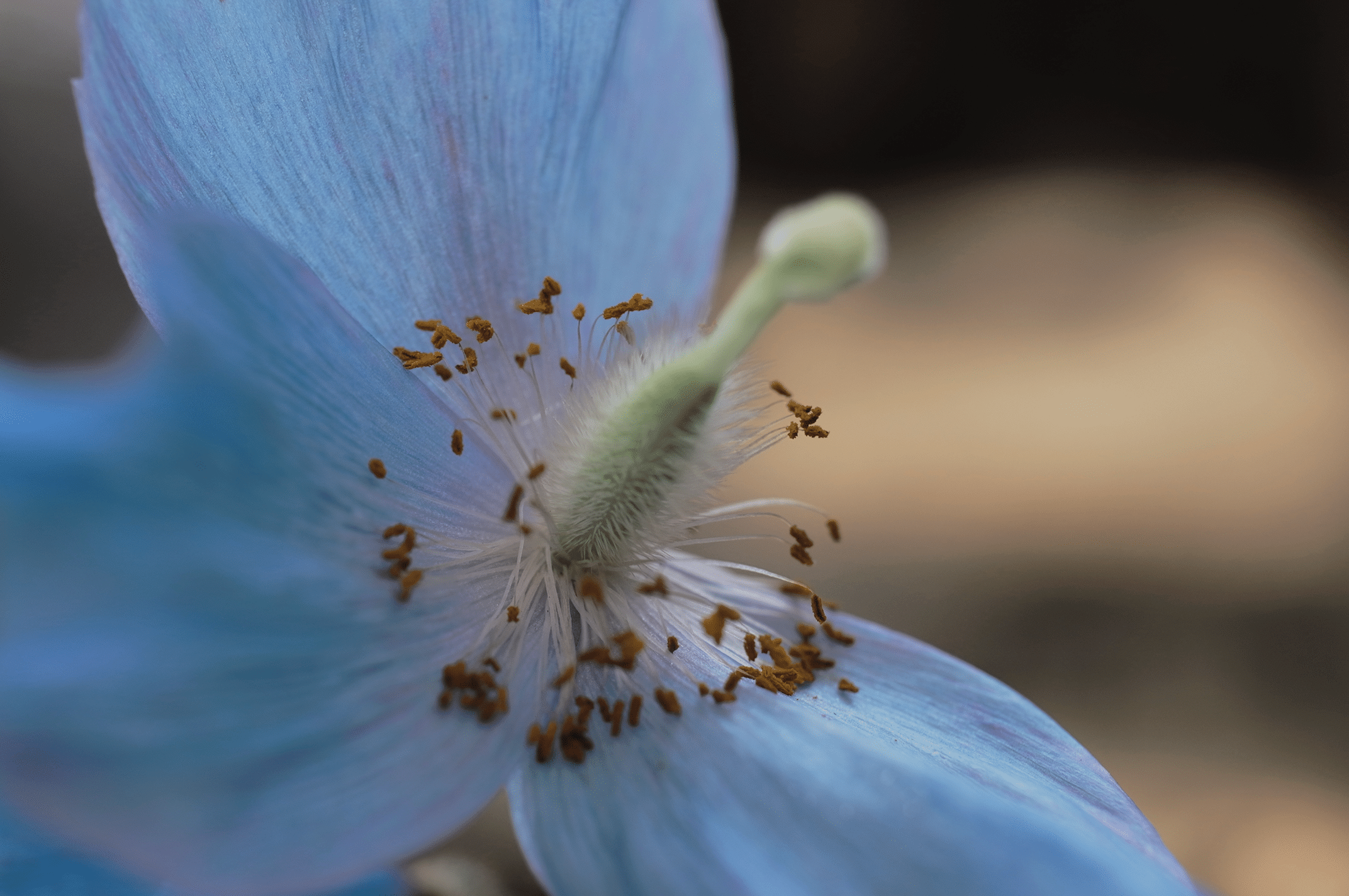
Native to the Himalayas, Meconopsis betonicifolia, known as the Himalayan blue poppy, is a perennial plant part of the prestigious family of Papaveraceae and is a member of the 70 species of the Meconopsis genus. Disguised like poppy flowers because of their similar physical features, although they are large showy flowers, which are magnificently blue or violet-blue in color and can measure up to 7-10 centimeters in diameter. The petals are papery and delicate, and the flowers themselves are borne on tall, slender stems that can reach up to 1 meter in height. They flourish only in high-altitude regions in cool and moist environments, generally, in the late spring season, and are typically found growing in open meadows, rocky slopes, and along rivers. Its rare disposition makes it a precious jewel for gardeners to grow, leaving them to aspire more as this flower speaks languages of mysteries unheard of, where one can only dream to hear her true stories.
A recent discovery was made in the kingdom of Bhutan as they celebrated their national flower, the blue poppy, which was re-identified to be an entirely new species of the blue poppy family. Hence it was renamed to Meconopsis gakyidiana derived from the national language Dzongkha “gakyid” which means happiness, tributing to the unique concept of GNH (Gross National Happiness). In addition to more happiness, two more species of blue poppies were discovered in the outlining regions of Bhutan.

The whole existence of this species is exciting and wondrous, and it is said to symbolize potential and possibility. However, the continuation of its being stays vulnerable to earthly changes. Nature has its way of making you feel things, the discoveries can go on, but if nature decides its journey, we only get to view it like words in an old book. The rarity of this blue species lay in the edges of our dreams, like the muse of an artist, and one would hope to glance at her someday, but that day must be when one decides to step on their journey to the Himalayas and beyond.

Nepal's Honey Hunters
In the misty foothills of the Himalayas, honey hunters risk their lives harvesting wild honey from vertical cliffs as their ancestors have done for centuries. This wild honey is known for its amber color and slightly bitter taste. Also known as ‘mad honey’, it is highly prized for medicinal properties believed to relieve hypertension, provide a burst of energy, or work as a sweet substitute for Viagra. Consuming this honey can cause reactions ranging from a slowed heartbeat and hallucinations to temporary paralysis and unconsciousness. Risk not only lies in consuming this honey, but also in harvesting it.
The harvest takes place twice a year in tandem with spring and autumn festivals. The practice is tightly interwoven with Himalayan culture and beliefs. The honey hunters of Nepal must first perform a ceremony for the cliff gods to pray for safety and forgiveness from the bees. A ceremony commonly involves offerings of fruit, flowers, rice, and sheep.
The hunt begins as hand-spun rope ladders are flung down upon sheer cliffs from above, enabling barefoot hunters to reach the precariously perched hives of Apis Laboriosa, the world’s largest honey bee. Smoke is used to disorient thousands of irate bees that must be coaxed to leave their nests. The smoke helps, but there is no way for a hunter to escape the inevitability of being stung.


Blood, bites, and blisters are synonymous with the hunt. Honey hunters muster the courage to invade the hives with a sharp bamboo implement called a ‘tango’ in one hand and the rope ladder in the other. Untethered and suspended at dizzying heights, the lives of these honey hunters depend on their ability to contend with swarming bees while cutting away blocks of precious honeycomb and lowering them to the ground in delicate woven baskets.
Once the honey is harvested, the hunters thank the bees and pray that the colony flourishes so that the practice may continue for generations to come. Much of the honey is destined to travel to Kathmandu, where it is sold to customers around the globe. But some of the bounty is divided and shared by those who have gone to unfathomable heights to harvest it.

With the demand for wild honey growing, harvesting honey has become a steady source of income for the honey hunters, but recent reports show that this once-plentiful nectar is dwindling just as fast. Ratna Thapa, senior bee scientist at Tribhuvan University in Kathmandu, says, “Every year there is a 70% decline in the Himalayan cliff honeybee population.” The rapidly declining bee population poses an immediate threat to the honey hunters and their traditional way of life.
Stories of the honey hunters of Nepal and their plight have spread across the globe. In 2013, documentary travel photographer Andrew Newey spent two weeks living with the Gurung people of central Nepal in a remote region untouched by tourism to document a three-day autumn hunt. In 2018, National Geographic produced a short documentary film called The Last Honey Hunter in partnership with a local organization called the dZi Foundation. The film’s gravity-defying scenes take viewers on a hunt with Kulung culture in Nepal’s Hongu river valley. Powerful stories such as these offer a rare window and emotional connection to an ancient Himalayan tradition on the brink of extinction.
Photography by Eric Valli
Words by Trixie Pacis – Commissioned by hima jomo

The Himalayas: Source of life for half the world’s population
One glance at the mighty landscape and towering snow-peaks, and we are mesmerized forever. Stunning mountains, dense temperate forests, dazzling snow reflecting the sunlight, deep alluring chasms, winding rivers, rich varied biodiversity, and innumerable legends; all these describe the incredible Himalayas. ‘Hima’ meaning snow and ‘Alaya’ meaning ‘abode’ in Sanskrit, the mountains are a major part of the lives of Tibetans, Indians, Nepalis, and many others who live in proximity to these grand mountains.

Whether it’s the Shivaliks (the foothills of the mountains) or the highest peaks (Mount Everest, Kanchenjunga, and others), the Himalayas have inspired poets, fascinated tourists, and sustained more than half the earth’s population.
A Source of Livelihood
According to the World Wildlife Federation (WWF), the combined drainage basin of the Himalayas is home to some 3 billion people in 18 countries, almost half the world’s population. The mountain range is the source of 6 of Asia’s great rivers, including the Yangtze, Indus, and Ganges, and home to thousands of species of animals and plants. The importance of perennial rivers like the Ganges and Brahmaputra is well-known, and billions depend on the great Himalayan basin for agriculture. With nearly 15,000 glaciers, several lakes, streams, and small rivers, this range hosts the source of livelihood for countless people.
Biodiversity of the Himalayan Range – Flora
The Himalayan range is a unique geographical area where rich biodiversity exists. There is a permanent ‘snow line’ at the highest altitude which gives rise to perennial rivers like the Ganges and the Brahmaputra. The altitude, rainfall, and soil conditions along with snow result in distinct and diverse flora and fauna.
Oak forests, Pine forests, apple trees, dwarf pomegranate trees, orchids, deodar trees, blue bamboos, coral berry plants, Himalayan birches, and several herbal plants are found here…
Biodiversity of the Himalayan Range – Fauna
Whether it is the elusive endangered mountain snow leopard or the unique Himalayan marmot, these majestic mountains house a number of reptiles, mammals, birds, and insects like the Grey wolf, Tibetan fox, Eurasian lynx, Asian gold cat, Red panda, Grey langur, and Wood mouse apart from Jackdaws, Ravens, Bar-headed geese, and Peacocks which add colorful diversity and beauty to this region.
Two unique reptiles found here are the Indian Rock Python and Tibetan Spring snake.
Recently, the melting of glaciers and erosion of the soil of this mountain range have been a cause for concern for the entire world. Efforts to conserve the biodiversity and ecological balance of the Himalayas have been initiated on a global scale, with conservationists and scientists from various domains joining hands. It’s an endeavor that will have a great impact on the future of humankind itself since it will work towards the preservation of this beautiful region which is a giver of life to countless species, including human beings.
Words by Sterling Holidays