




The Himalayan Cedar
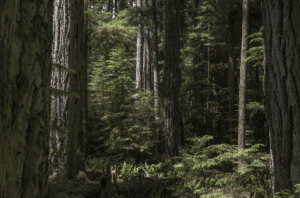
The Himalayan cedar, scientifically known as Cedrus deodara, is a remarkable tree species that flourishes in the western Himalayas. Revered for its grandeur and elegance, this evergreen conifer holds significant cultural, ecological, and economic value.
This majestic tree has captivated the hearts of explorers, poets, and nature enthusiasts for centuries with its enchanting presence, aromatic fragrance, and enduring qualities that make it a symbol of strength and grace. Native to the western Himalayas, including Afghanistan, India (Jammu and Kashmir, Himachal Pradesh), Pakistan, and Nepal, the Himalayan cedar thrives in the high-altitude regions of these areas. Standing tall at heights of up to 50 meters (165 feet), with a broad and glorious canopy, this tree symbolizes strength and resilience.

The most striking feature of the Himalayan cedar is its dense, dark green foliage that remains vibrant throughout the year. Its long and slender needles are arranged in clusters, giving the tree a soft and graceful appearance. During spring, the Himalayan cedar adorns itself with delicate, light brown cones that mature and release their seeds over time.
The practical uses of the Himalayan cedar are equally noteworthy. The wood of this tree is highly valued for its durability, fine grain, and resistance to decay. It is commonly employed in construction, furniture crafting, and the production of musical instruments. The wood’s aromatic properties also make it a popular choice for manufacturing incense and essential oils. Moreover, the resin obtained from the Himalayan cedar has long been used for its medicinal properties. Traditional Ayurvedic medicine utilizes it to treat various ailments, including respiratory disorders, arthritis, and skin conditions. The essential oil derived from the tree is known for its soothing and calming effects, making it a sought-after ingredient in aromatherapy.
Beyond its visual appeal, the Himalayan cedar plays a vital role in maintaining the fragile mountain ecosystems of the western Himalayas. The cedar forests are home to rich biodiversity, providing habitats for a variety of plant and animal species. Its extensive root system aids in preventing soil erosion, preserving fragile mountain slopes, and maintaining the delicate balance of the ecosystem. However, the Himalayan cedar faces challenges due to deforestation and habitat loss, and unregulated logging and land conversion for agriculture pose significant threats to its survival. As we continue to face environmental challenges, the preservation of these forests becomes crucial for the well-being of our planet and future generations.

Nepal's Honey Hunters
In the misty foothills of the Himalayas, honey hunters risk their lives harvesting wild honey from vertical cliffs as their ancestors have done for centuries. This wild honey is known for its amber color and slightly bitter taste. Also known as ‘mad honey’, it is highly prized for medicinal properties believed to relieve hypertension, provide a burst of energy, or work as a sweet substitute for Viagra. Consuming this honey can cause reactions ranging from a slowed heartbeat and hallucinations to temporary paralysis and unconsciousness. Risk not only lies in consuming this honey, but also in harvesting it.
The harvest takes place twice a year in tandem with spring and autumn festivals. The practice is tightly interwoven with Himalayan culture and beliefs. The honey hunters of Nepal must first perform a ceremony for the cliff gods to pray for safety and forgiveness from the bees. A ceremony commonly involves offerings of fruit, flowers, rice, and sheep.
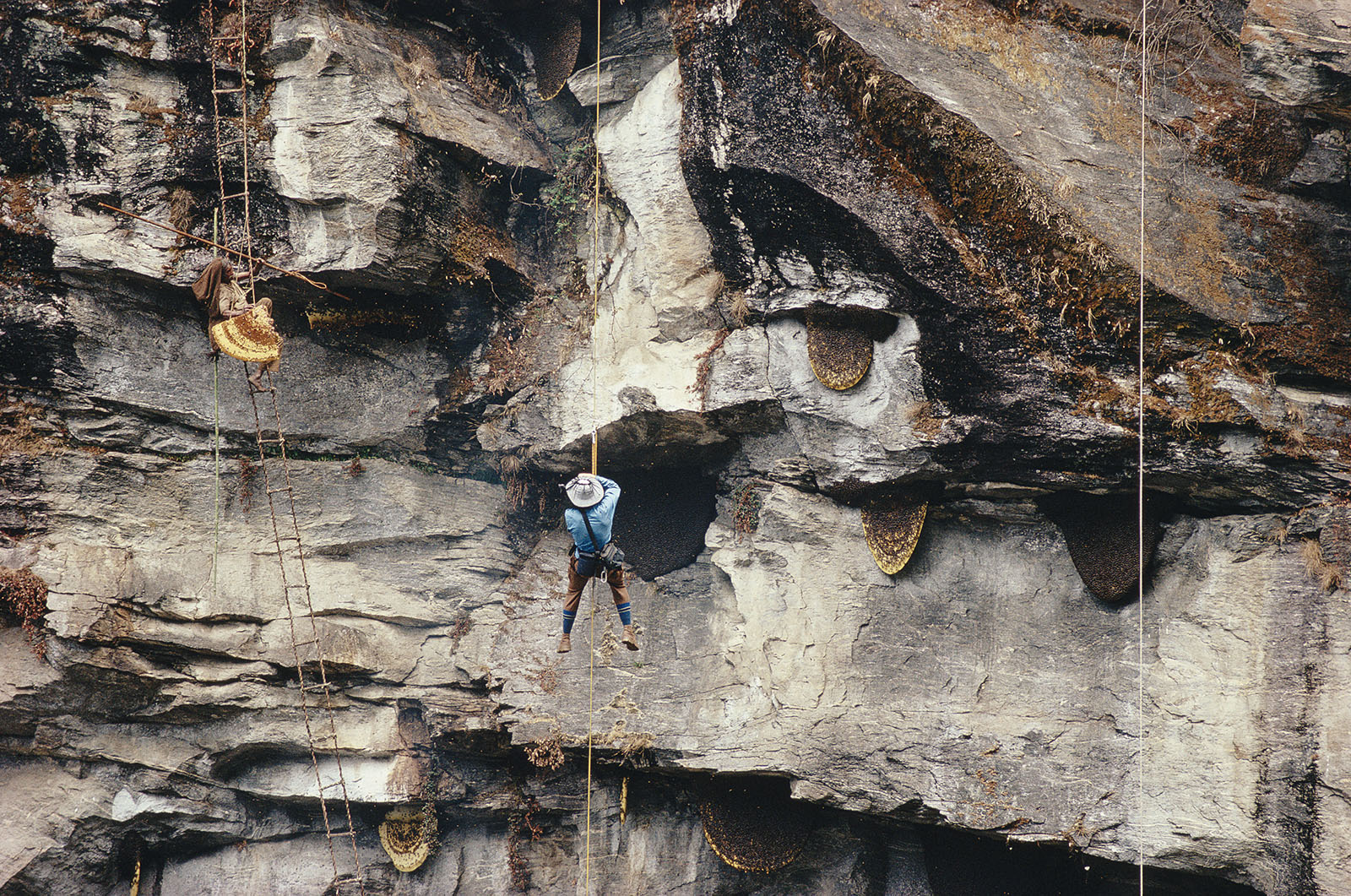
The hunt begins as hand-spun rope ladders are flung down upon sheer cliffs from above, enabling barefoot hunters to reach the precariously perched hives of Apis Laboriosa, the world’s largest honey bee. Smoke is used to disorient thousands of irate bees that must be coaxed to leave their nests. The smoke helps, but there is no way for a hunter to escape the inevitability of being stung.


Blood, bites, and blisters are synonymous with the hunt. Honey hunters muster the courage to invade the hives with a sharp bamboo implement called a ‘tango’ in one hand and the rope ladder in the other. Untethered and suspended at dizzying heights, the lives of these honey hunters depend on their ability to contend with swarming bees while cutting away blocks of precious honeycomb and lowering them to the ground in delicate woven baskets.
Once the honey is harvested, the hunters thank the bees and pray that the colony flourishes so that the practice may continue for generations to come. Much of the honey is destined to travel to Kathmandu, where it is sold to customers around the globe. But some of the bounty is divided and shared by those who have gone to unfathomable heights to harvest it.
With the demand for wild honey growing, harvesting honey has become a steady source of income for the honey hunters, but recent reports show that this once-plentiful nectar is dwindling just as fast. Ratna Thapa, senior bee scientist at Tribhuvan University in Kathmandu, says, “Every year there is a 70% decline in the Himalayan cliff honeybee population.” The rapidly declining bee population poses an immediate threat to the honey hunters and their traditional way of life.
Stories of the honey hunters of Nepal and their plight have spread across the globe. In 2013, documentary travel photographer Andrew Newey spent two weeks living with the Gurung people of central Nepal in a remote region untouched by tourism to document a three-day autumn hunt. In 2018, National Geographic produced a short documentary film called The Last Honey Hunter in partnership with a local organization called the dZi Foundation. The film’s gravity-defying scenes take viewers on a hunt with Kulung culture in Nepal’s Hongu river valley. Powerful stories such as these offer a rare window and emotional connection to an ancient Himalayan tradition on the brink of extinction.
Photography by Eric Valli
Words by Trixie Pacis – Commissioned by hima jomo
The Velvet Queen (La panthère des neiges)
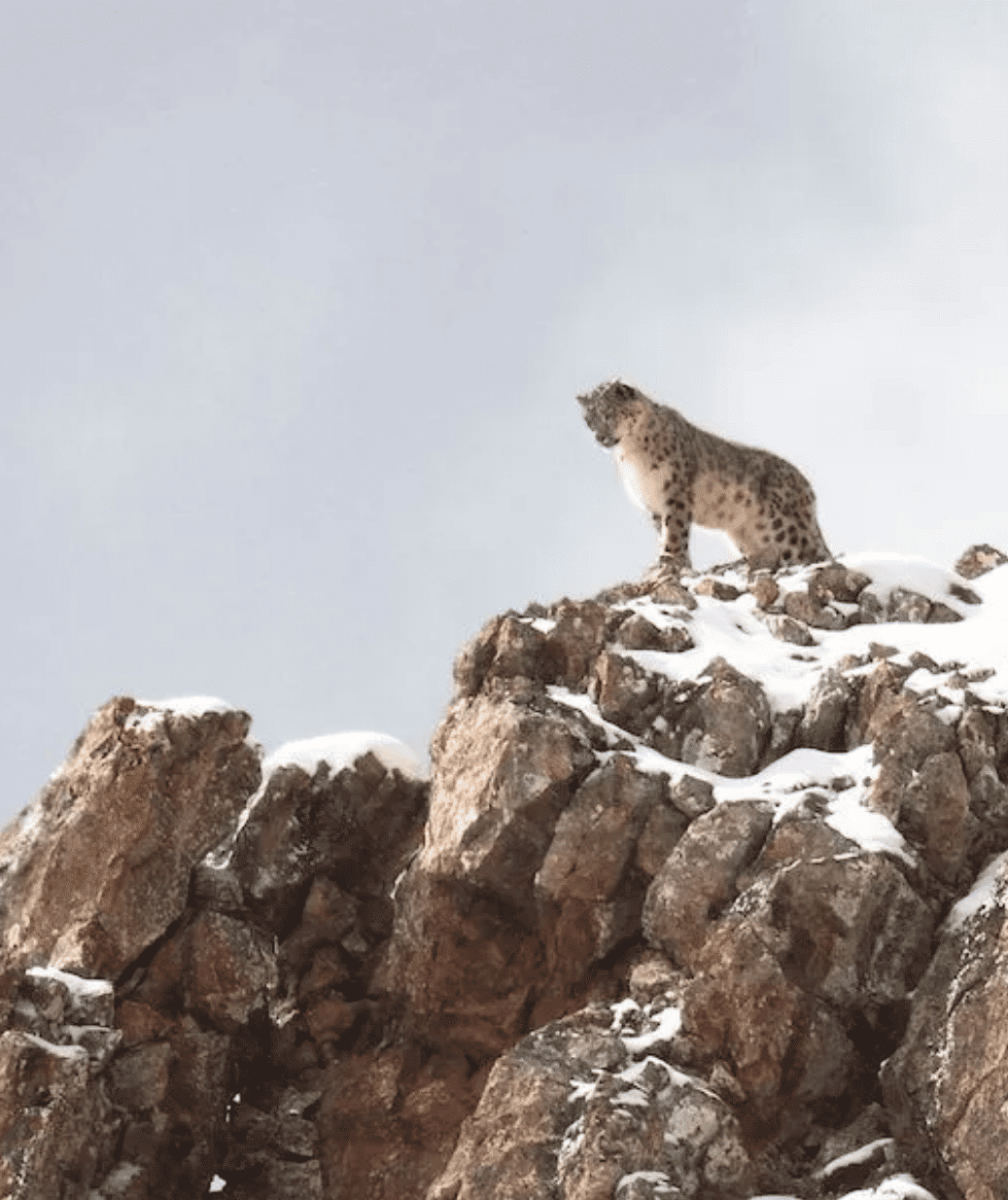
In the heart of the Tibetan highlands, photographer Vincent Munier brings writer Sylvain Tesson on his quest to find the snow leopard. He introduces him to the subtle art of waiting from a blind spot, tracking animals, and finding the patience to catch sight of the beasts.
Through their journey in the Tibetan peaks, inhabited by invisible presences, the two men engage in a conversation on our place among living beings and celebrate the beauty of the world.


The Himalayas: Source of life for half the world’s population
One glance at the mighty landscape and towering snow-peaks, and we are mesmerized forever. Stunning mountains, dense temperate forests, dazzling snow reflecting the sunlight, deep alluring chasms, winding rivers, rich varied biodiversity, and innumerable legends; all these describe the incredible Himalayas. ‘Hima’ meaning snow and ‘Alaya’ meaning ‘abode’ in Sanskrit, the mountains are a major part of the lives of Tibetans, Indians, Nepalis, and many others who live in proximity to these grand mountains.

Whether it’s the Shivaliks (the foothills of the mountains) or the highest peaks (Mount Everest, Kanchenjunga, and others), the Himalayas have inspired poets, fascinated tourists, and sustained more than half the earth’s population.
A Source of Livelihood
According to the World Wildlife Federation (WWF), the combined drainage basin of the Himalayas is home to some 3 billion people in 18 countries, almost half the world’s population. The mountain range is the source of 6 of Asia’s great rivers, including the Yangtze, Indus, and Ganges, and home to thousands of species of animals and plants. The importance of perennial rivers like the Ganges and Brahmaputra is well-known, and billions depend on the great Himalayan basin for agriculture. With nearly 15,000 glaciers, several lakes, streams, and small rivers, this range hosts the source of livelihood for countless people.
Biodiversity of the Himalayan Range – Flora
The Himalayan range is a unique geographical area where rich biodiversity exists. There is a permanent ‘snow line’ at the highest altitude which gives rise to perennial rivers like the Ganges and the Brahmaputra. The altitude, rainfall, and soil conditions along with snow result in distinct and diverse flora and fauna.
Oak forests, Pine forests, apple trees, dwarf pomegranate trees, orchids, deodar trees, blue bamboos, coral berry plants, Himalayan birches, and several herbal plants are found here…
Biodiversity of the Himalayan Range – Fauna
Whether it is the elusive endangered mountain snow leopard or the unique Himalayan marmot, these majestic mountains house a number of reptiles, mammals, birds, and insects like the Grey wolf, Tibetan fox, Eurasian lynx, Asian gold cat, Red panda, Grey langur, and Wood mouse apart from Jackdaws, Ravens, Bar-headed geese, and Peacocks which add colorful diversity and beauty to this region.
Two unique reptiles found here are the Indian Rock Python and Tibetan Spring snake.
Recently, the melting of glaciers and erosion of the soil of this mountain range have been a cause for concern for the entire world. Efforts to conserve the biodiversity and ecological balance of the Himalayas have been initiated on a global scale, with conservationists and scientists from various domains joining hands. It’s an endeavor that will have a great impact on the future of humankind itself since it will work towards the preservation of this beautiful region which is a giver of life to countless species, including human beings.
Words by Sterling Holidays